Video Games That Defied Early Struggles to Become Modern Classics
The shooter genre is defined by thrilling, adrenaline-fueled gameplay where players master an arsenal of weapons, as seen in the remarkable turnarounds of cult classics like Titanfall 2 and Fortnite.
The world of video games is filled with stories of titles that launched to little fanfare or even widespread criticism, only to rise from the ashes through developer dedication and growing player appreciation. The shooter genre, in particular, has seen several such remarkable turnarounds. These games, often featuring fast-paced, adrenaline-fueled gameplay where players engage enemies with an arsenal of weapons, initially failed to capture the market's imagination. Yet, through post-launch support, unique mechanics, or simply finding their audience over time, they transformed into beloved cult classics and industry mainstays, offering thrilling experiences that continue to resonate with players in 2026.
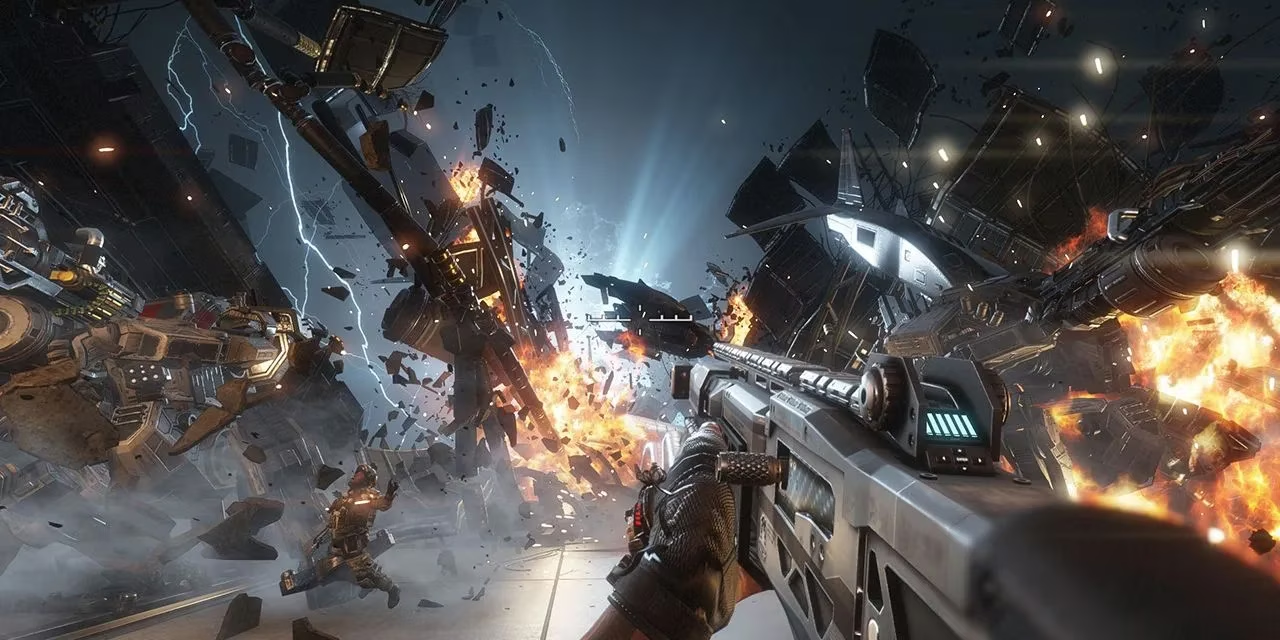
Titanfall 2 stands as a prime example of a game that found its legacy after launch. Released in 2016 by Respawn Entertainment, this first-person shooter was set in a futuristic world where players seamlessly transitioned between controlling an agile soldier and a massive mechanical Titan. Despite its innovative, fluid gameplay and a critically acclaimed single-player campaign, it was overshadowed at release. Over the years, its unique blend of on-foot parkour and pilot combat has earned it a fervent cult following. The dedicated player base in 2026 still celebrates its masterful design, ensuring its place as a fan-favorite for anyone seeking a uniquely exhilarating shooter experience.
Fortnite's journey is perhaps the most dramatic rags-to-riches story in gaming history. Launched in 2017 by Epic Games, its initial Battle Royale mode failed to garner immediate widespread popularity. However, its unique building mechanics, which allowed players to construct fortifications on the fly, coupled with a relentless schedule of in-game events and a strong focus on social, cross-platform play, slowly built a dedicated community. This foundation exploded into a global cultural phenomenon. By 2026, Fortnite has solidified itself as more than a game—it's a persistent digital social space with a massive player base, a lucrative esports ecosystem, and countless collaborations across pop culture, cementing its status as a modern classic.
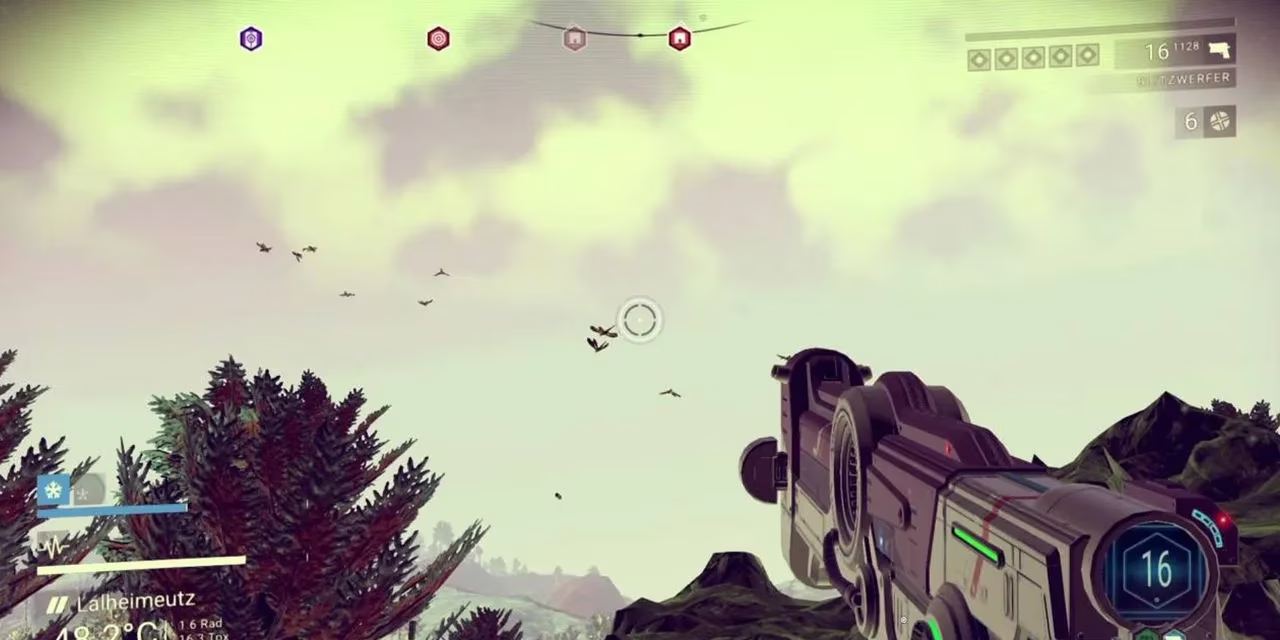
While not a traditional shooter, No Man's Sky (2016) deserves mention for its incredible redemption arc. Initially met with widespread disappointment for not meeting sky-high pre-launch expectations, the space exploration game was criticized for a perceived lack of content. The developers at Hello Games embarked on one of the most commendable post-launch support journeys in the industry. Through years of free, substantial updates—adding features like base building, multiplayer, improved graphics, and entire new gameplay systems—they transformed the experience. By 2026, No Man's Sky is hailed as a landmark title, beloved for its vast, immersive, and ever-expanding universe, proving that sustained developer passion can rewrite a game's destiny.
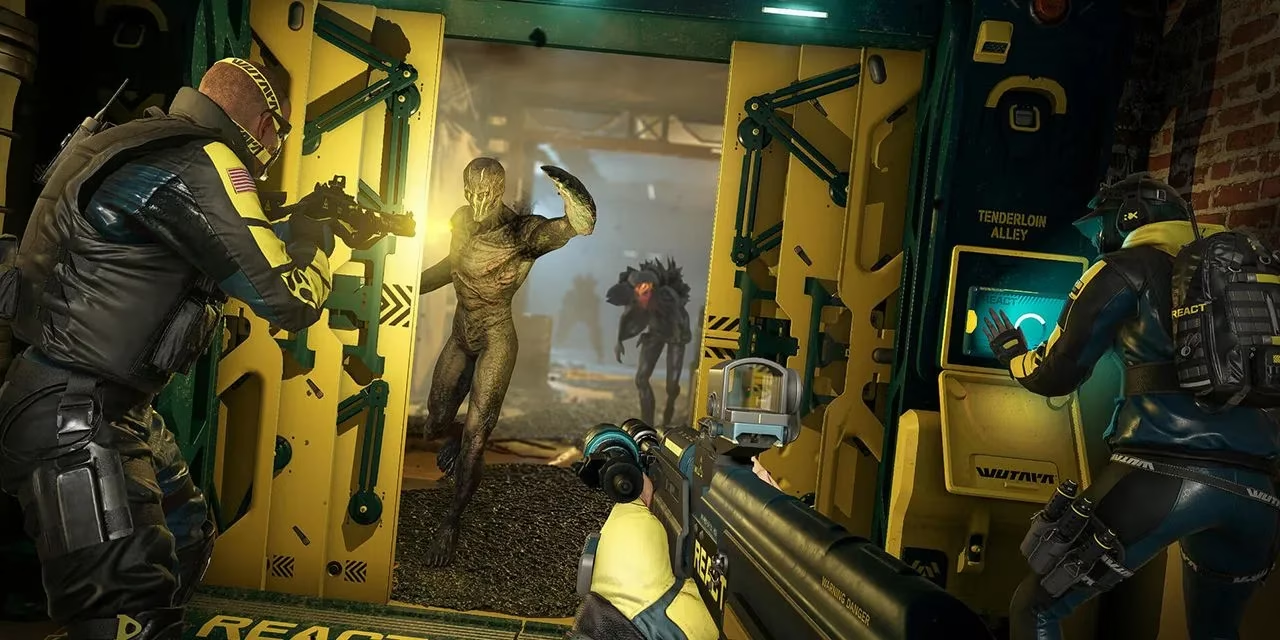
Tom Clancy's Rainbow Six Siege represents the power of consistent, live-service development. Launched in 2015 into a crowded shooter market, its tactical, team-based gameplay struggled initially. Ubisoft's commitment was unwavering; they delivered a steady stream of new content, including:
-
New Operators with unique gadgets 🎮
-
Fresh and competitively balanced maps 🗺️
-
Core gameplay improvements and meta shifts ⚙️
This "games as a service" model, focused on deep tactical teamwork, strategic planning, and highly destructible environments, cultivated a dedicated community. In 2026, Rainbow Six Siege remains a pillar of the tactical shooter genre, with a strong, competitive player base that continues to grow.
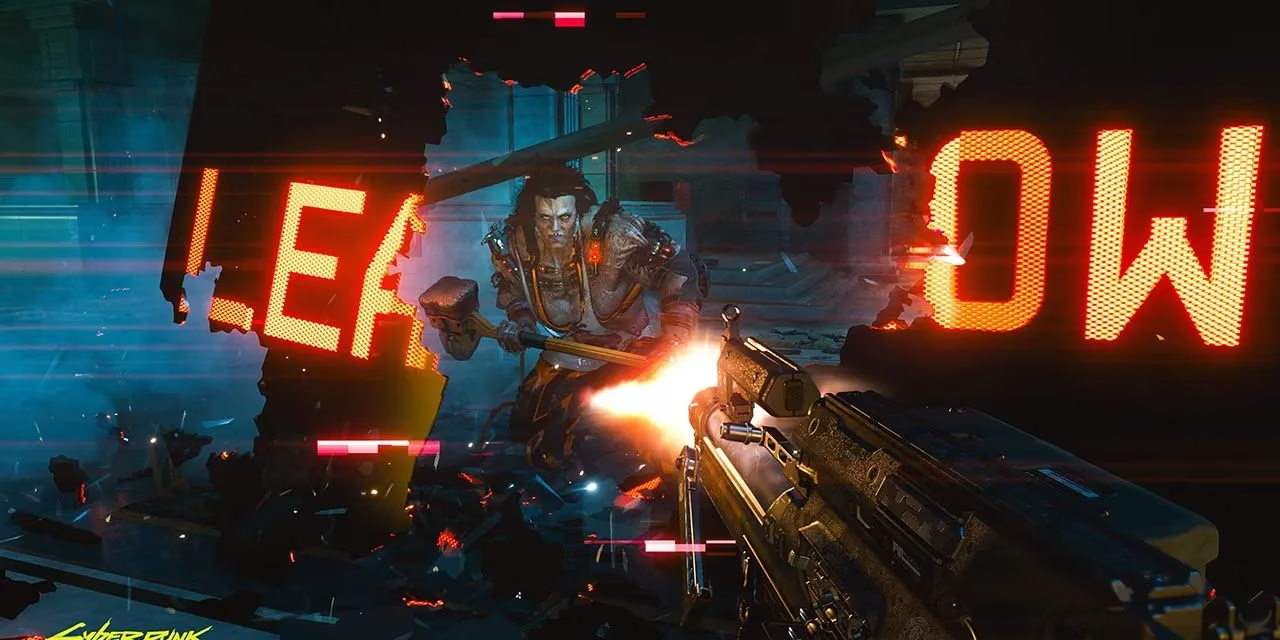
The launch of Cyberpunk 2077 in 2020 was marred by significant technical issues, especially on last-generation consoles, leading to widespread criticism and refunds. Despite the rocky start, CD Projekt RED undertook a massive effort to fix the game. Multiple major patches and updates addressed bugs, improved performance, and even reworked core systems. By 2026, the game is celebrated for its strengths: an engaging, branching narrative set in the dazzling Night City, deep character customization, and a richly detailed open world. While a cautionary tale about launch hype, it is now a popular title whose reputation has been largely rehabilitated through persistent improvement.
Other shooters followed similar paths to redemption and cult status:
-
Battlefield V (2018): Criticized at launch for a lack of content and bugs, but through continuous updates adding new maps, weapons, and modes, it evolved into a popular entry praised for its historical atmosphere and large-scale multiplayer battles.
-
Prey (2017): Arkane Studios' immersive sim/shooter blended atmospheric storytelling with creative gameplay. Its initial commercial performance was modest, but its clever design, allowing players to solve problems in multiple ways using unique powers and gadgets, earned it a passionate cult following that has only grown.
-
Sniper Elite V2 (2012): This tactical shooter overcame mediocre initial scores thanks to its highly satisfying sniping mechanics, realistic ballistics, and the iconic X-Ray kill cam. Its success spawned a thriving franchise that continues to this day.
-
Shadow Warrior (2013): A reboot that mixed classic frenetic shooting with over-the-top humor and Asian mythology. Its fast-paced combat and charismatic protagonist, Lo Wang, won over players, leading to successful sequels and solidifying its cult classic status.
The common thread among these titles is resilience. Whether through unwavering post-launch support, a unique hook that eventually found its audience, or simply the passage of time allowing players to rediscover hidden gems, these games demonstrate that a launch is not always destiny. In the dynamic landscape of 2026, where games can be updated and communities can form over years, the stories of Titanfall 2, Fortnite, No Man's Sky, and others serve as inspiring reminders that a game's true legacy is often written by the players who come to love it and the developers who refuse to give up on their vision.