Tiny Game Worlds: Reimagining Modern Classics Through a Tilt-Shift Lens
Experience Skyrim, Cyberpunk 2077, and Red Dead Redemption 2 reimagined as breathtaking miniature dioramas in Flurdeh's Tiny Game Worlds series.
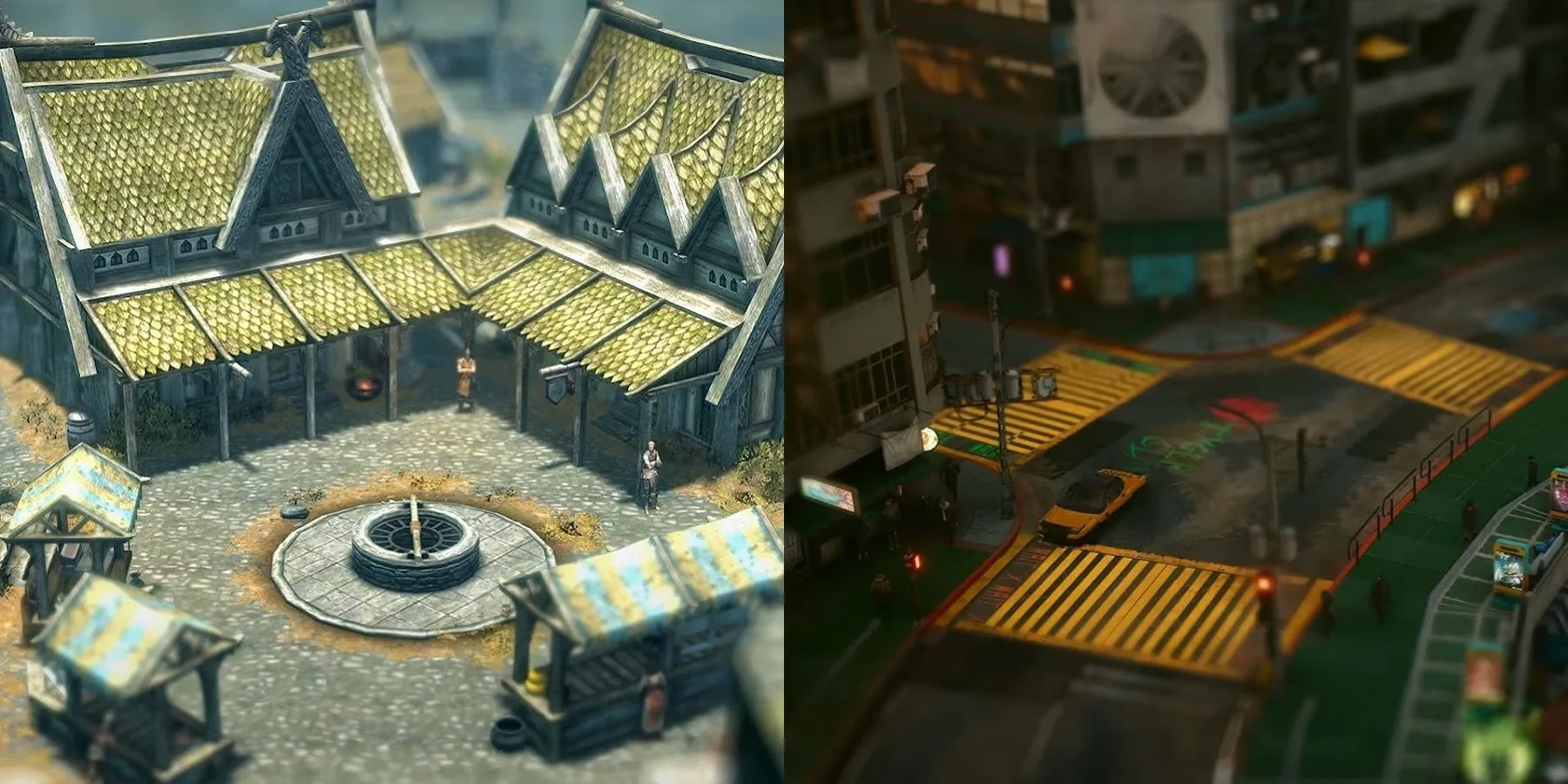
In the vast landscape of modern gaming, titles like The Elder Scrolls 5: Skyrim, Cyberpunk 2077, and Red Dead Redemption 2 are synonymous with immersive, sprawling worlds experienced through first or third-person perspectives. These viewpoints are designed to pull players directly into the narrative, making them feel like an integral part of the environment. However, a creative YouTuber, Flurdeh, has embarked on a fascinating project that challenges this conventional presentation. By applying a tilt-shift photographic technique to footage from these beloved games, Flurdeh has transformed them into what appear to be intricate, miniature isometric dioramas, offering a completely fresh and captivating way to view these digital masterpieces.
The Art of Perspective Shift
Flurdeh's series, aptly named "Tiny Game Worlds," is a collection of visual experiments that recontextualize some of the most iconic settings in gaming. The tilt-shift technique, often used in photography to make real-world scenes look like miniature models, is applied here with stunning effect. It manipulates the focus and depth of field, creating a sharp, central area that gradually blurs towards the edges. This optical illusion compresses the grand scale of these virtual environments, making towering cities and vast wildernesses appear as finely crafted tabletop setups. The result is not a gameplay modification but a purely aesthetic reinterpretation that highlights the architectural and environmental design in a new light.
A Gallery of Miniaturized Universes
The playlist features an impressive array of games, each offering a unique tableau when viewed from this novel angle:
-
The Elder Scrolls V: Skyrim: The bustling streets of Whiterun or the serene, snow-capped peaks transform into a lively, miniature fantasy village scene.
-
Cyberpunk 2077: Night City's neon-drenched, vertical sprawl becomes a mesmerizing futuristic model, with tiny cars and pedestrians moving through its dense canyons.
-
Red Dead Redemption 2: The epic vistas of the American frontier are condensed into what looks like an incredibly detailed historical diorama.
-
Fallout: New Vegas: The iconic, dilapidated glamour of the Vegas Strip takes on a new, almost toy-like charm.
-
Assassin's Creed Origins, Days Gone, Battlefield 1: Each game's distinct setting—ancient Egypt, a zombie-infested highway, World War I battlefields—is rendered with a unique, miniature aesthetic.
What makes these videos so compelling is that they retain the original game's animations and life. NPCs (Non-Player Characters) continue their programmed routines, wandering the streets or engaging in combat, but they now resemble animated figurines in a elaborate playset. This preservation of motion within the static-looking scene creates a delightful contrast.
The Legacy of Fan Reimaginings
Flurdeh's work is part of a rich tradition within gaming communities where fans creatively reinterpret official content. Years prior, another enthusiast reimagined the Mass Effect series as an isometric action-RPG, conceptualizing entirely new gameplay. Flurdeh's approach is different; it's a cinematic re-framing rather than a gameplay proposal. It demonstrates how the visual foundation of these games is so strong that it can withstand and even flourish under such a radical perspective shift. These projects underscore the deep affection fans have for these worlds and their endless potential for reinterpretation.
| Aspect | Traditional View | Tilt-Shift "Tiny World" View |
|---|---|---|
| Scale Perception | Immense, player-scaled | Miniature, model-like |
| Focus | Player-centric action | Environmental tableau |
| Emotional Impact | Immersion & agency | Wonder & aesthetic appreciation |
| Gameplay | Interactive | Purely visual (in this context) |
Looking Forward from 2026
As of 2026, Flurdeh's "Tiny Game Worlds" series stands as a celebrated example of digital fan art. While the original playlist featured 16 distinct games, the concept continues to inspire discussions about perspective in game design. It poses intriguing questions: Could future games incorporate such visual filters as an optional mode? How would newer, even more graphically dense titles like the hypothetical Elder Scrolls VI or the next Grand Theft Auto look through this lens? The project reminds us that the worlds developers build are not just stages for action but are artistic compositions that can be admired from countless angles. It encourages players to sometimes just stop, look around, and appreciate the sheer craftsmanship of these virtual spaces—even if they appear to be the size of a coffee table. 😊
The enduring appeal of these videos lies in their ability to make the familiar feel wondrously new. They strip away the UI and the direct control, leaving behind the pure, miniature beauty of the game world itself, waiting to be observed.
This assessment draws from PEGI, underscoring how radically different presentations—like Flurdeh’s tilt-shift “Tiny Game Worlds” reframing of Skyrim, Cyberpunk 2077, and Red Dead Redemption 2—don’t alter a title’s underlying content, themes, or intensity. Even when a cinematic filter turns vast, player-scale spaces into miniature-looking dioramas, the core elements that define a game’s experience (violence, fear, language, or other sensitive material) remain the same—highlighting the distinction between aesthetic reinterpretation and actual gameplay/content changes.