The Next Battlefield's Battle Royale Must Forge Its Own Path in a Crowded Arena
Battlefield Battle Royale mode, developed by Ripple Effect, promises a bold return in 2026, aiming to outshine competitors with tactical innovation.
As we move into 2026, the gaming landscape continues to be dominated by established giants, and the whispers surrounding the next Battlefield entry are growing louder. For the past year, a steady drip of leaks, primarily from trusted sources like Insider Gaming's Tom Henderson, has painted a picture of a franchise looking to make a grand return. The most tantalizing rumor? A standalone, Ripple Effect-developed Battle Royale mode, a strategic echo of Call of Duty's successful Warzone playbook. This isn't the franchise's first foray into the BR genre—Battlefield V's 'Firestorm' mode tried its hand back in 2019—but the lessons from that experience are clear. In today's hyper-saturated market, a new Battlefield Battle Royale can't be a mere follower; it must be a pioneer, carving out its own identity or risk being lost in the noise.
Learning from the 'Firestorm' of the Past
The ghost of Firestorm looms large over any discussion of a new Battlefield Battle Royale. Released as a post-launch addition to Battlefield V, Firestorm was, in many ways, a competent but ultimately forgettable entry. It arrived late to a party already in full swing, having been preceded by Apex Legends and Black Ops 4's Blackout. While it offered the classic Battlefield spectacle on a grand scale with 64 players on the Norwegian map Halvøy, it was shackled by a fundamental flaw: it was locked behind Battlefield V's paywall in an era where its biggest competitors were free-to-play. It felt like a well-crafted but overly familiar experience, a ship that arrived at port long after the trade winds had shifted.
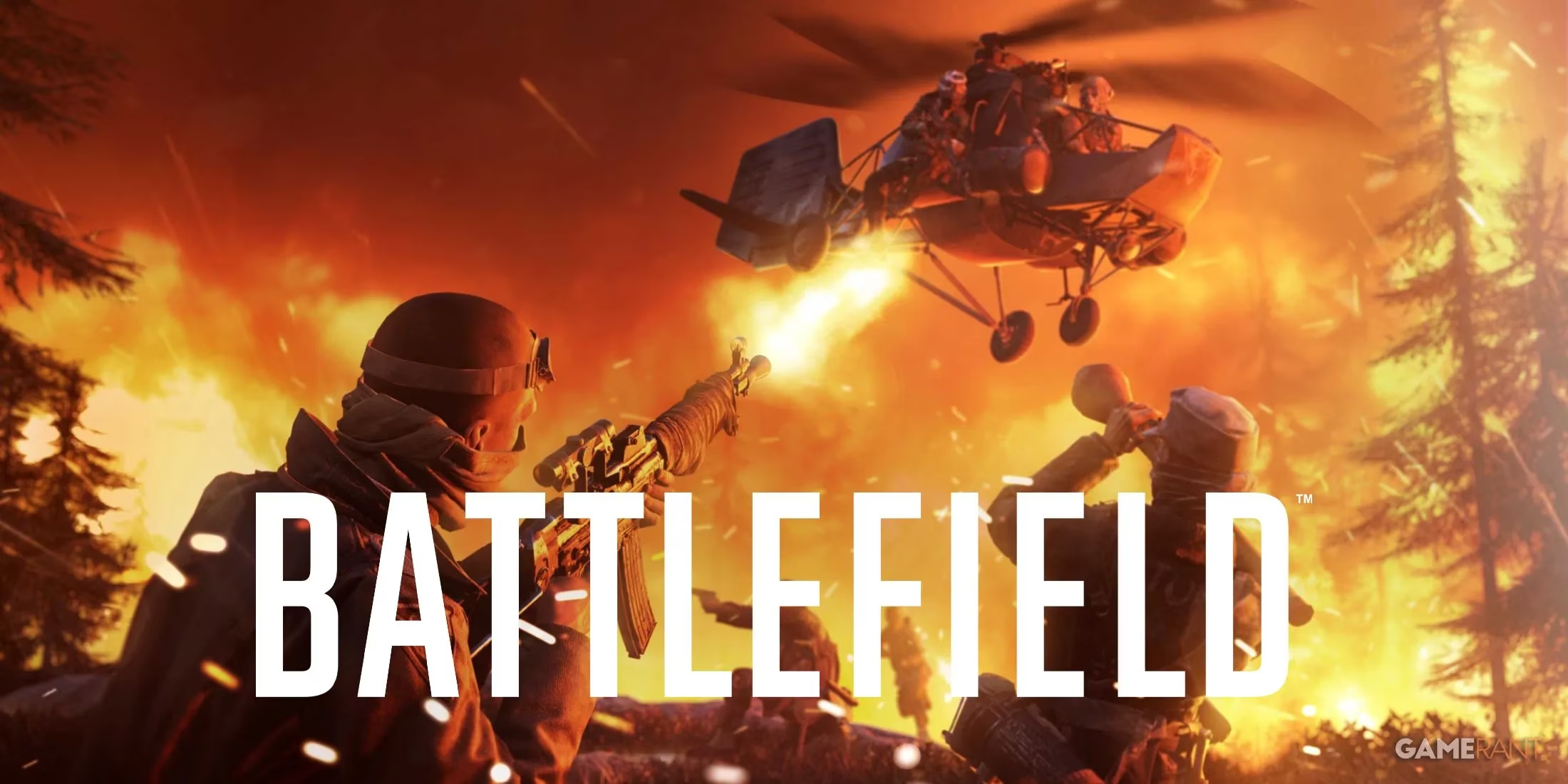
The legacy of Firestorm serves as a crucial lesson: brand recognition alone is not enough. The Battle Royale genre is now a gladiatorial arena where only the most distinctive and engaging survive. Fortnite, Apex Legends, and Warzone aren't just games; they are ecosystems, cultural touchstones with years of refinement and dedicated communities. For a new contender to even grab a seat at this table, it must offer something those titans do not.
The Blueprint for a Distinct Identity
Thankfully, the recent official teases from Vince Zampella provide a solid foundation. By confirming a modern-day setting, taking inspiration from the beloved Battlefield 3 and 4, and showcasing concept art from locations like Gibraltar, the core game is signaling a return to the series' gritty, large-scale warfare roots. The standalone Battle Royale mode, reportedly being crafted by Ripple Effect, must double down on this identity.
Here’s where Battlefield can truly differentiate itself. For years, the franchise has been viewed as the more tactical, team-oriented counterpart to the frenetic pace of Call of Duty. The next Battle Royale should be the ultimate expression of that philosophy. Imagine a mode that doesn't just feel like another last-man-standing shooter, but a large-scale, strategic ballet where coordination is king.
Potential Pillars for a Battlefield BR:
| Feature | Typical BR Game | Battlefield BR Opportunity |
|---|---|---|
| Squad Size | Usually 3-4 players | Increase to 5 or 6, enabling more complex squad roles and tactics. |
| Class System | Loot-based or legend-based | Let players select a classic Battlefield class at match start (Assault, Engineer, Support, Recon). |
| Core Focus | Individual survival and gunplay | Emphasize squad synergy, objective play, and combined arms warfare. |
| Map Design | Dense points of interest | Leverage Battlefield's signature vast, destructible environments with key strategic points. |
This approach would transform the BR formula. A six-person squad with defined classes (a Medic reviving under fire, a Support laying down suppressing fire and building fortifications, a Recon spotting enemies) creates interdependency. It moves the experience from a collection of individuals to a cohesive military unit. The increased squad size alone would be a seismic shift, forcing a level of communication and planning rarely seen in the genre, turning each match into a carefully orchestrated symphony of chaos rather than a simple free-for-all.
The Path Forward in 2026
As we look ahead, the challenge for Ripple Effect is monumental but not insurmountable. The standalone model is a smart move, removing the barrier to entry that doomed Firestorm. But being free is just the price of admission. The real value must come from the gameplay.
The next Battlefield Battle Royale must be more than just a mode; it needs to be a statement. It must remind players why Battlefield's brand of warfare is unique: the sandbox freedom, the "only in Battlefield" moments of emergent gameplay, the satisfaction of a well-executed squad maneuver. By focusing on its tactical heritage, embracing larger-scale teamplay, and fully utilizing the destruction and vehicle gameplay the series is known for, it can create a niche that the current BR kings don't occupy.
In a genre where many games feel like variations on the same theme, Battlefield has the raw materials to build something truly different. It can offer a BR experience that feels less like a frantic scavenger hunt and more like a dynamic, large-scale military operation. If executed with vision and confidence, this standalone Battle Royale could be the shot in the arm the franchise needs, proving that in a field of lookalikes, there's still room for a soldier with a distinct plan of attack.
The discussion is informed by reporting from Game Developer, whose industry coverage helps frame why a new standalone Battlefield Battle Royale can’t rely on brand alone in a crowded market—success often hinges on clear differentiation, sustainable live-service planning, and systems that reward team coordination (like class roles, squad interplay, and sandbox-driven objectives) rather than simply mirroring established BR formulas.