The Largest Map in Battlefield History: Halvøy's Vast Terrain
Battlefield V’s Firestorm mode introduced Halvøy, the franchise’s largest map ever—a sprawling Norwegian peninsula that still holds the record today.
The Battlefield series has long been celebrated for its sprawling, immersive battlefields that blend infantry combat, vehicular warfare, and destructible environments. Over nearly two decades, DICE has transported players to pivotal moments in history and imagined near-future conflicts, but one question consistently stirs passionate debate among fans: which entry boasts the largest map ever created? The answer lies not in a mainline multiplayer arena, but rather in a limited-time game mode added to Battlefield V. Firestorm, the franchise’s first and only battle royale experiment, introduced Halvøy — a map so colossal that it still stands unchallenged in 2026.
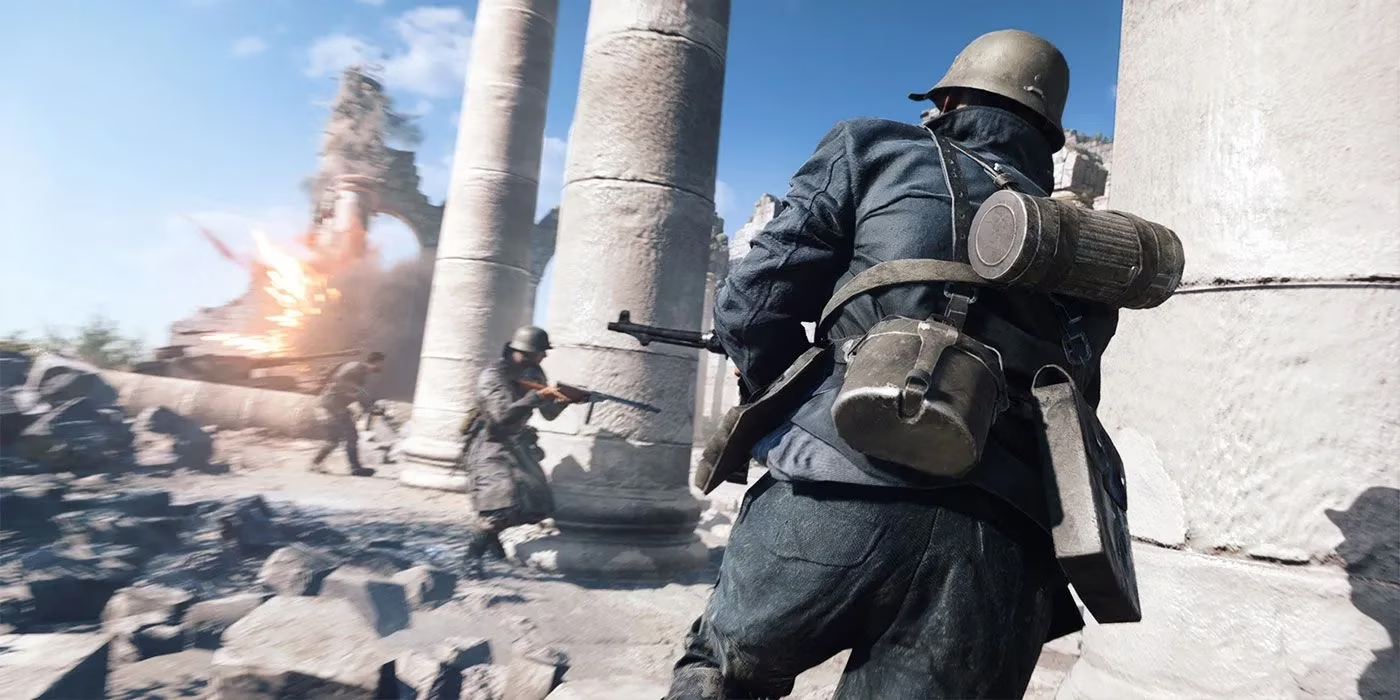
Map design has always been a cornerstone of the Battlefield identity. From the snowy peaks of Battlefield 4's Operation Locker to the sun-scorched deserts of Battlefield 1's Sinai Desert, each location has pushed the boundaries of scale and interactivity. Destruction, dynamic weather, and terrain deformation are not just visual flourishes; they fundamentally alter how players approach each firefight. A well-placed rocket can collapse a building onto an enemy squad, while a sudden sandstorm or blizzard can turn a clear line of sight into a chaotic scramble for cover. DICE refined these systems with every release, and by the time Battlefield V arrived in 2018, the technology was mature enough to support a battle royale map of unprecedented size.
Before Halvøy, the largest map in Battlefield V was Hamada, a sprawling desert expanse in North Africa that hosted up to 64 players across modes like Conquest and Breakthrough. Hamada measured approximately 1.5 kilometers from end to end — respectable, but hardly record-breaking by open-world standards. DICE then revealed that its Firestorm map would dwarf Hamada by a factor of ten. The community erupted with curiosity, and when Firestorm finally went live in March 2019, Halvøy was everything promised and more.
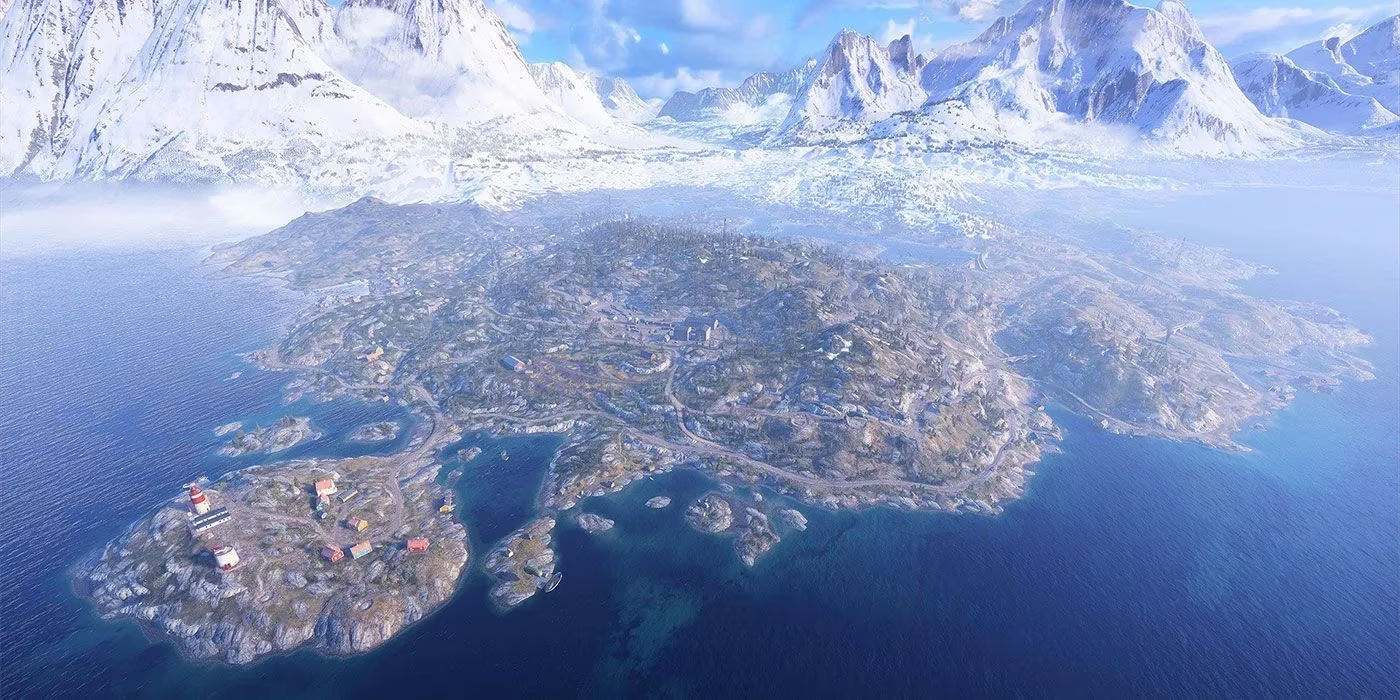
Halvøy is set on a fictional Norwegian peninsula, a choice that allows for dramatic environmental diversity within a single play space. The northern sections are blanketed in snow, dotted with frozen lakes and rustic villages where every footstep leaves a crunching trail. Moving south, the terrain transitions into dense pine forests and rocky outcrops, before finally giving way to a rugged coastline with industrial docks and seaside cabins. A dynamic weather system amplifies the atmosphere — thick fog can roll in without warning, reducing visibility to a few meters, while heavy rain slicks the ground and muffles the sound of approaching enemies. These conditions are more than cosmetic; they directly influence combat tactics, forcing squads to adapt on the fly.
But the true metric of Halvøy’s magnitude lies in its square footage. DICE never officially disclosed the exact dimensions, but community sleuths like Reddit user Milekill1 crunched the numbers. By analyzing in-game coordinates and travel times, they estimated the map to cover roughly 12 square kilometers (4.6 square miles). To put that into perspective, the entirety of Hamada could fit inside Halvøy ten times over. When compared to other prominent battle royale maps of the era, Halvøy was larger than Fortnite's original Athena island (about 5.5 square kilometers) and roughly equivalent to Erangel from PUBG before its size reduction. Yet Firestorm only supported 64-player lobbies, half the capacity of typical battle royale titles, making for a much more deliberate and tension-filled pace.
The Firestorm mode itself added a unique survival twist to the core Battlefield formula. Players dropped into Halvøy with nothing, scrambling for weapons and armor while a ring of fire — literal fire, not just an energy field — steadily closed in, consuming everything in its path. Vehicles like tanks and helicopters were scattered across the map, rewarding teams that controlled key landmarks. This marriage of massive scale and methodical gameplay showcased what DICE could achieve when freed from the constraints of traditional multiplayer design.
Since the release of Battlefield V, the series has continued to evolve. Battlefield 2042, which launched in 2021, introduced 128-player matches across sprawling maps like Orbital and Breakaway. Breakaway, set in Antarctica, became one of the franchise's largest post-Halvøy maps, yet it still fell short at roughly 6 square kilometers — only half the area of the Norwegian peninsula. Even in 2026, with rumors swirling about the next mainline Battlefield title, Halvøy retains its crown. Developers have teased a return to even grander battlefields, possibly leveraging procedural generation or seamless world streaming, but no official announcement has confirmed a successor to the throne.
Looking back, Halvøy was more than a marketing gimmick or a reaction to the battle royale craze. It represented a culmination of everything DICE had learned about level design, environmental storytelling, and player-driven destruction. The map’s sheer size encouraged long-range reconnaissance and strategic positioning, while its varied sectors kept engagements fresh. Players could stalk through a blizzard one moment and take cover behind collapsing factory walls the next. As modders and archivists continue to preserve Firestorm servers on PC, Halvøy remains a pilgrimage site for those who want to experience the largest canvas Battlefield has ever offered.
The quest for ever-bigger maps is not simply about numbers. It is about creating a sense of place — a world that feels alive, reactive, and worth fighting for. Halvøy succeeded in that mission, and its legacy still echoes in the design conversations happening at DICE today. Whether the next chapter of Battlefield finally exceeds those 12 square kilometers remains to be seen, but until then, Halvøy stands alone as the series’ geographic giant.