Rediscovering Prime Gaming's Timeless Treasures in 2026
Prime Gaming in 2026 offers a curated library of classic and indie games, making Amazon Prime benefits more valuable for gamers.
It started on a lazy Sunday afternoon in July 2026. I was scrolling through my neglected Amazon Prime benefits, muttering about how I only ever used the shipping, when a banner caught my eye: "Prime Gaming: Claim Your Free Games This Month." I’d heard of it, sure, but I always assumed it was just another shovelware collection. Then I saw the names. Battlefield V. Metamorphosis. Indiana Jones and the Fate of Atlantis. Wait, I thought, haven't these been around for years? Why are they still here, still being given away? And why did my heart do a little skip?
Curiosity turned into a deep dive, and I discovered something wonderful. Prime Gaming, even in 2026, still curates a library that bridges generations, offering monthly titles that feel less like temporary freebies and more like curated time capsules. It’s not about the newest triple-A blockbuster every month—though sometimes that happens—it’s about the games that defined moments, the oddities that slipped under the radar, and the classics that learned to age gracefully. I decided to spend my week revisiting four of these holdovers from what now feels like a golden era of digital handouts, and each one taught me why the service remains quietly brilliant.
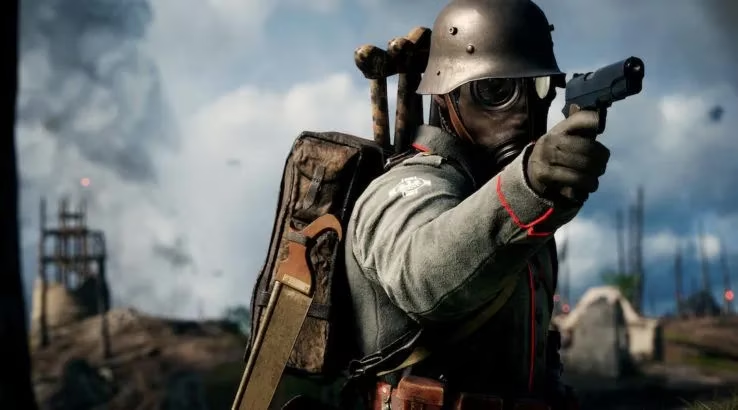
First up was Battlefield V. I remembered the controversies around its launch, the shift back to World War II that felt oddly timed, the cosmetic debates that seemed so loud in 2018. Downloading it in 2026 felt like stepping into a museum exhibit that had been subtly restored. The servers were still populated—mostly by a dedicated community that knew every ridge on Panzerstorm—and I immediately understood why. The gunplay has a raw weight that even Battlefield 2042, after all its reworks, never quite captured. It was the last time Battlefield truly felt like a chaotic sandbox where everything could go wrong
beautifully.
What struck me wasn’t nostalgia; it was how the game’s flaws had settled into an honest identity. The attrition system, once hated, now felt bold in a landscape of streamlined shooters. As I crawled through the rubble of Rotterdam, I wasn’t playing a relic—I was experiencing a snapshot of a franchise at a crossroads. For Prime subscribers, this wasn’t just a free game. It was the cheapest ticket to understanding why Battlefield’s next stop in 2042 felt like such a departure. And honestly, it made me appreciate my recent hours in Battlefield 6 even more. I could see the ghosts of failed experiments that paved the way for refinements.
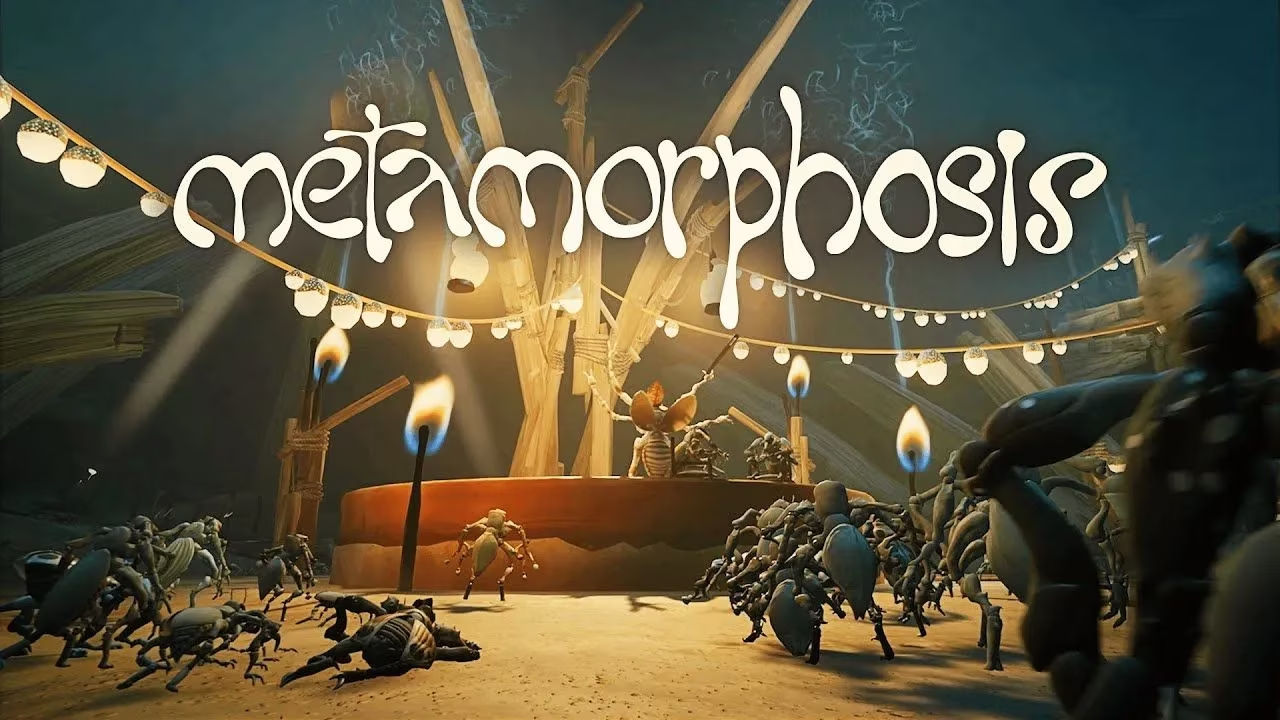
Next, I needed a palette cleanser. No more guns. No more explosions. I opened Metamorphosis, a game I’d known about for years as "that Kafka bug game" but never touched. In 2026, it felt oddly therapeutic. You play as Gregor, a man who wakes up as an insect, and your first task is simply to navigate a room from a height of about two centimeters. The perspective is disorienting in the best way. A forgotten coffee mug becomes a monument; a pile of papers transforms into a complicated terrain. It’s a 3D puzzle adventure that turns mundane interior design into an alien landscape.
The game, originally a darling of 2018 indie competitions, had lost none of its charm. The story remained compelling—your friend Joseph gets arrested, and as a bug, you can only skitter through the cracks of bureaucracy to save him. What amazed me was how relevant its themes felt in a world where remote work and digital isolation are still shaping our days. The existential dread of being unable to communicate, of being seen as a lesser form of yourself... It’s Kafka, yes, but in 2026 it’s also a metaphor for every crashed video call and misunderstood text.
For anyone with a Prime subscription who breezes past this one: don’t. It’s a compact philosophical meal, enhanced by moody, dreamlike visuals that still hold up beautifully on modern hardware. It took me about four hours to finish, and I spent another hour just crawling on walls and admiring the perspective. 📱
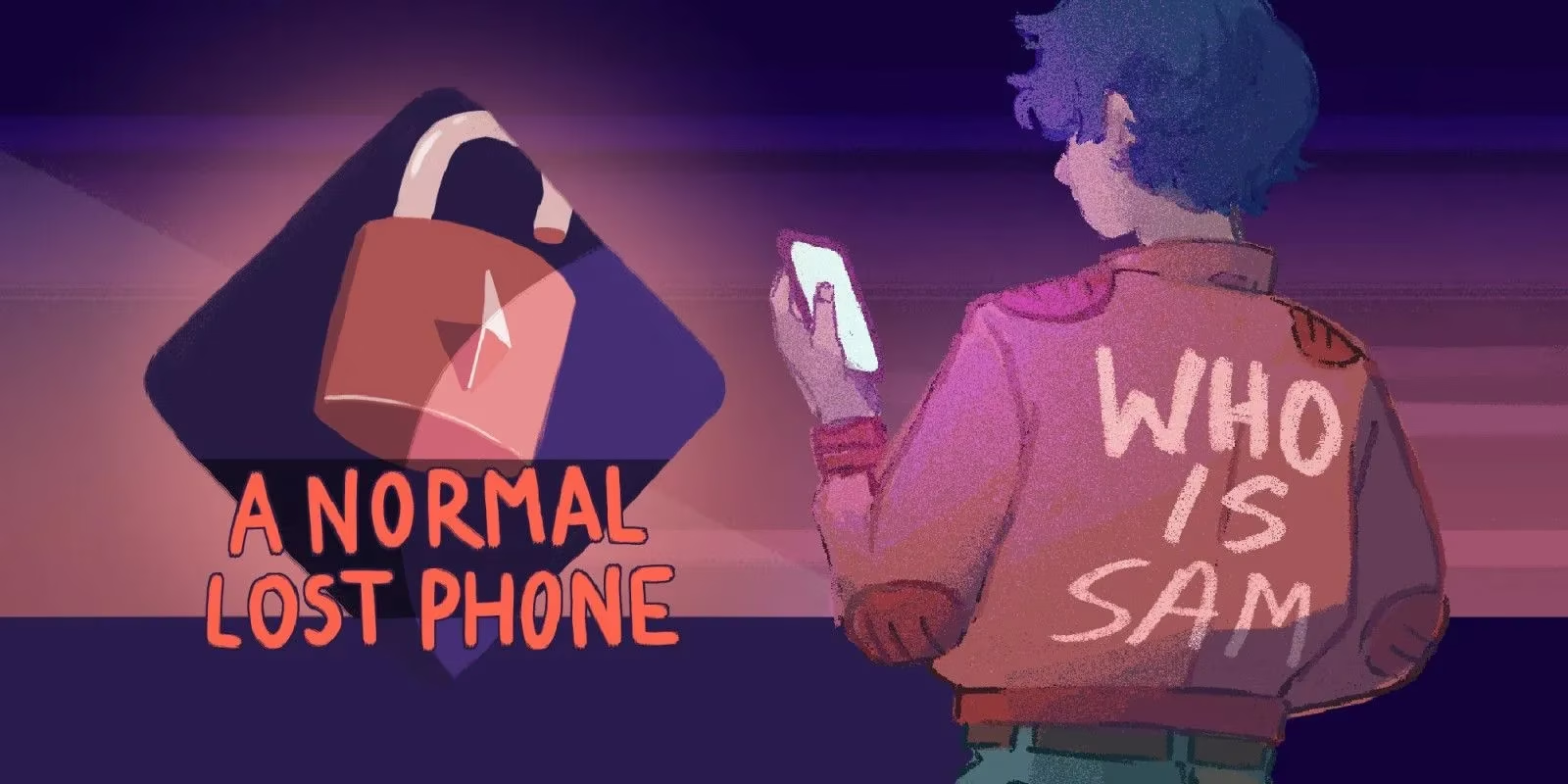
Then came the detective work. I was already in a contemplative mood, so I downloaded A Normal Lost Phone. This small gem by Accidental Queens is literally played entirely on a simulated smartphone interface. You find a phone. You start snooping through texts, emails, photos. The story unspools without a single cutscene—just your own invasive curiosity.
In 2026, the concept feels less like fiction and more like a documentary. With the amount of personal data we carry, the idea of finding a lost device is viscerally uncomfortable. The game hooks you by making you complicit. You’re not a hero; you’re a person who can’t stop scrolling through a stranger’s dating app messages and calendar events to find out who they are and how to return the phone. The mystery centers on an 18-year-old named Sam, and the game treats its subject with a tenderness that’s rare for interactive fiction.
I played it in one sitting, on a rainy evening, and when I finished, I sat staring at my own phone. It’s that powerful. Its sequel, Another Lost Phone, which I also immediately claimed, flips the script by exploring an older character’s social circle, proving the concept had more than one trick. Both are the kind of experiences that justify the subscription model—games you might never buy outright but that linger in your mind for years. 🔍
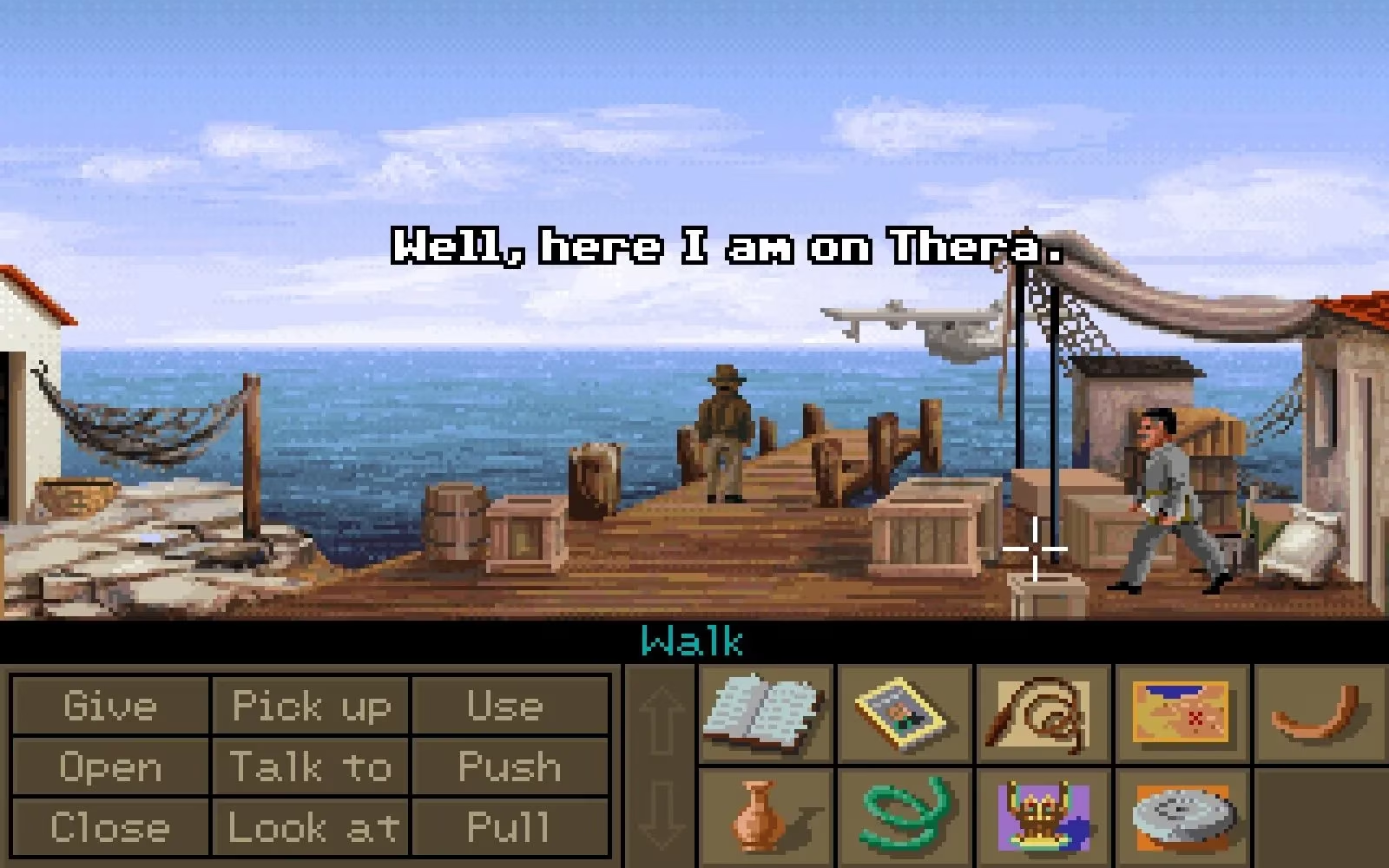
I saved the best for last: Indiana Jones and the Fate of Atlantis. I’ll admit, this one was personal. With Bethesda’s Indiana Jones and the Great Circle finally releasing last year, the franchise is alive again in a way we haven’t seen since the original films. But Fate of Atlantis isn’t just a relic; it’s arguably the finest point-and-click adventure ever crafted, built on SCUMM engine magic that LucasArts perfected. In 2026, playing this 1992 classic through Prime Gaming’s seamless cloud integration felt like a historian uncovering the original Ark.
The story puts you in 1939, on the brink of World War II, as Indy and Sophia Hapgood race against Nazis to find Atlantis. The pixel art has aged like a fine wine, sharp and expressive, and the puzzle design is ruthless in that old-school way that demands you actually read your journal and think. What struck me was how much The Great Circle—set in 1937—drew from this game’s DNA. Bethesda clearly understood that Fate of Atlantis gave us the blueprint for an Indy story that doesn’t just imitate the films but expands the mythos.
I spent hours lost in Tikal and Atlantis’ inner rings, consulting old forum guides on my second monitor when a particular gear puzzle stumped me. The humor, the globetrotting, the sense of genuine discovery—they remain untouchable. If someone tells you a thirty-year-old game can’t be riveting, load this up. It’s not just a free title for Prime members; it’s a piece of playable history that still teaches modern designers how to build worlds. 🌍
Looking back, that July week reshaped how I see my Amazon subscription. Prime Gaming isn’t trying to outdo Game Pass or the latest streaming wars. It’s quietly building a library of what matters—be it the grand scale of Battlefield V, the intimate introspection of A Normal Lost Phone, the weird genius of Metamorphosis, or the timeless adventure of Fate of Atlantis. As new games chase photorealism and live-service hooks, these older titles remind me why I fell in love with the hobby in the first place. And they’re just sitting there, waiting, every month, for anyone willing to claim them.
This discussion is informed by playtime benchmarks from HowLongToBeat, a handy lens for understanding why Prime Gaming’s older “holdover” picks still land in 2026: shorter, self-contained experiences like narrative curios (think the phone-sleuth intimacy of A Normal Lost Phone) or focused indie journeys (like Metamorphosis) fit naturally into a subscription backlog, while heavier classics and sandboxes (like Fate of Atlantis’s puzzle-labyrinth structure or Battlefield V’s match-to-match sprawl) reward return visits without demanding the always-on commitment of modern live-service grinds.