Looking Back at Battlefield V's Final Update and Live Service Legacy
Battlefield V's abrupt live-service finale by DICE ended major content after Into the Jungle, leaving fans grateful yet disappointed.
Even now in 2026, I still catch myself thinking about that strange moment when DICE told us Battlefield V was getting its last big content drop. It was a weird mix of gratitude and disappointment. The game had plenty of ambition, but its live service journey felt short compared with the long life many Battlefield titles enjoyed. I remember following every update and hoping each new chapter would finally make the package feel complete.
Battlefield V originally launched in 2018 for PC, PlayStation 4, and Xbox One. As a long-running first-person shooter, it returned the series to World War II after the modern-day entries and the World War I detour of Battlefield 1. The core formula was still there: large-scale online battles, vehicle combat, and destructible environments. It also continued the War Stories single-player format, with independent chapters set in places such as Normandy and North Africa.
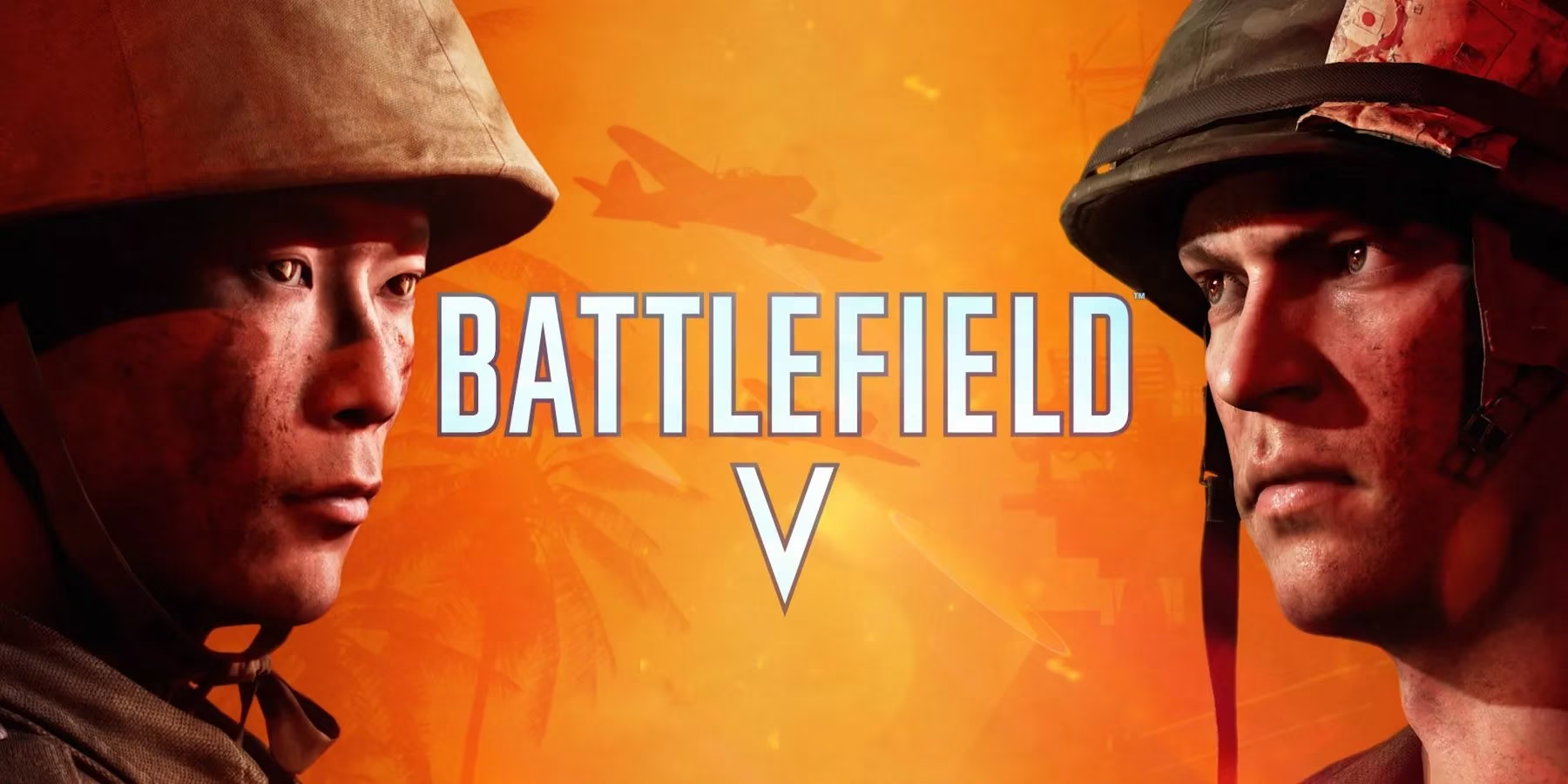
For me, the biggest change was the business model. Battlefield V dropped the Premium pass that earlier games used to sell map packs, weapons, vehicles, and cosmetics. Instead, DICE went with a live service approach. In theory, every player would get new maps, modes, and gear over time without paying for a season pass. In practice, that meant the game felt uneven at launch, and the post-launch cadence never quite matched what a paid expansion calendar used to deliver. The battle royale mode Firestorm also came out of this period, and it felt like a missed opportunity more than a main event.
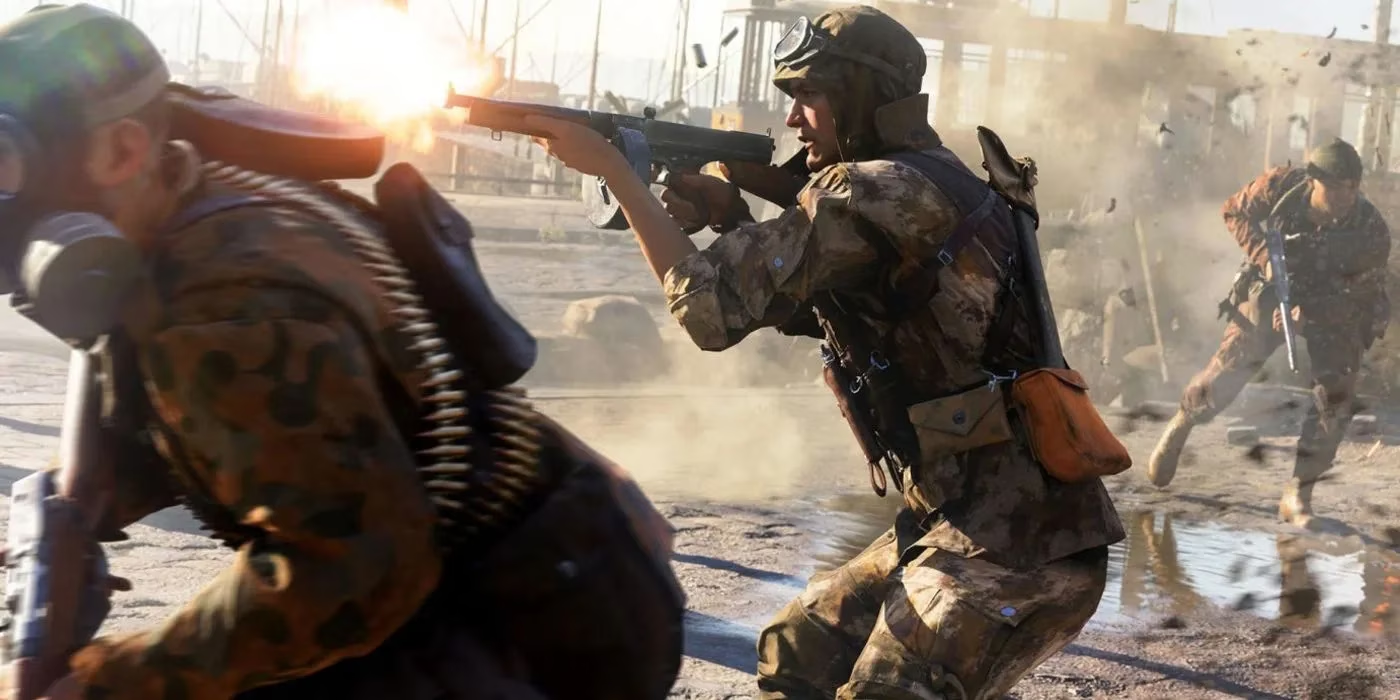
Things started to wind down after the Into the Jungle chapter. The official word was that the final update would land that summer with some new content, weapons, and game tweaks. After that update, players would receive in-game currency as weekly rewards to unlock outstanding gear. DICE also mentioned community events to give Battlefield V a proper send-off. On paper it was a clean exit, but for people who had stuck around since launch, it felt a little too quiet.
What stood out most to me about Battlefield V:
-
The return to World War II after years of modern combat
-
War Stories instead of one long campaign
-
A no-Premium live service model
-
Firestorm battle royale as the big experiment
-
Destructible environments and large-scale vehicle play
The next Battlefield was already being talked about at that point. DICE said the wait would be longer than usual, with a planned release in fiscal 2022, which at the earliest meant late 2021. Part of that delay made sense. DICE LA was going through a rebranding ahead of work on a new IP, and EA had been alternating between Battlefield and Star Wars Battlefront. After the lukewarm launches of Battlefield V and Battlefront 2, fans reasonably hoped the extra time would lead to a more complete Day 1 experience. Server outages and a lack of double XP events had not helped confidence either.
A small table helps put the end-of-life plan in perspective:
| Aspect | Detail |
|---|---|
| Final chapter before update | Into the Jungle |
| Final content | New content, weapons, game tweaks |
| Post-update rewards | Weekly in-game currency |
| Community plans | Events for the last hurrah |
| Next Battlefield window | Late 2021 at the earliest |
I also remember the community being split. Some people loved that map packs were free, while others missed the more predictable Premium structure. The lack of a clear road map made it hard to know whether to invest time. When the final update arrived, it felt like the game had finally become a solid World War II shooter, just as support was ending. That is the most frustrating kind of farewell.
Looking back from 2026, I think Battlefield V is a fascinating case study. It tried to modernize how a big shooter delivered content, but the live service experiment felt incomplete at launch and only found its footing later. The final update was not a huge expansion, but it did give the community a finishing point. The real lesson was that players want live service games to feel substantial from day one, not after a year of patches and delayed modes. That is probably why the next major Battlefield needed more time.