How Late Updates and #SaveBFV Gave Battlefield 5 a Second Life
Battlefield 5 updates sparked renewed community interest, leading to the #SaveBFV movement and calls for continued content from DICE.
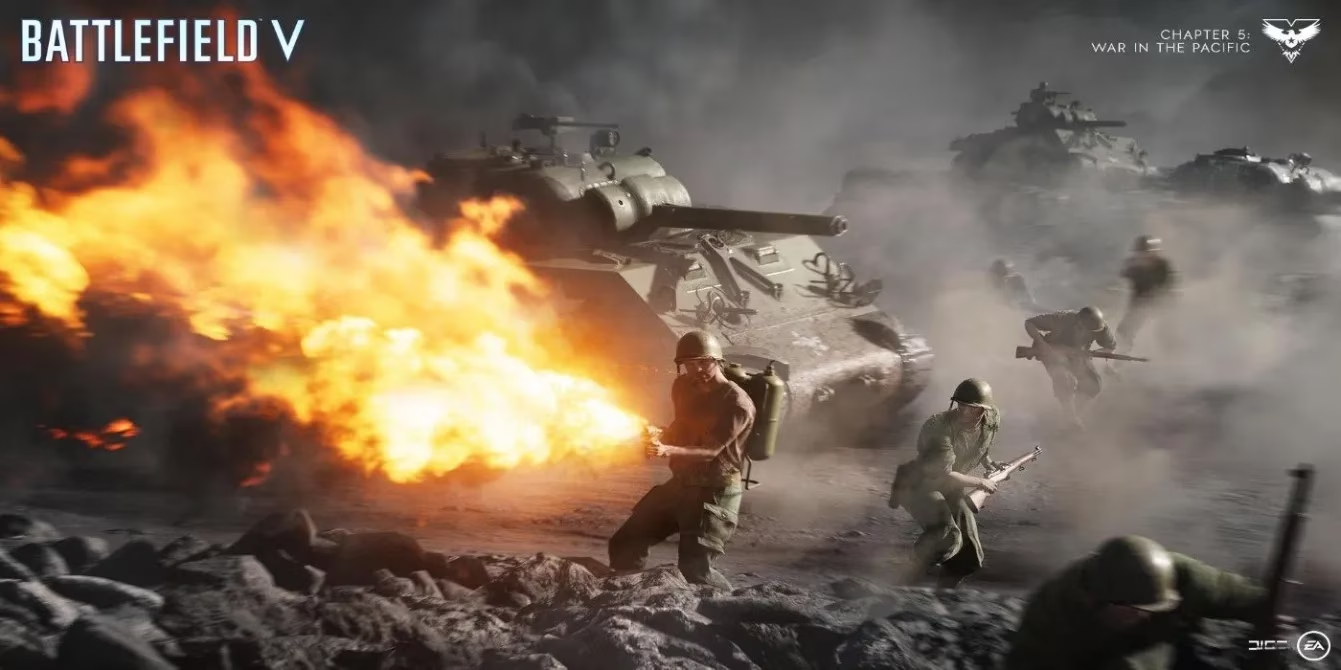
Battlefield 5 had one of the more unusual life cycles in modern first-person shooter history. After its 2018 launch, the game struggled to meet the expectations of publisher Electronic Arts and faced a divided player base. Some fans remained loyal to the franchise, while others questioned the direction of the title. However, a significant update that introduced new maps, weapons, and gadgets changed the conversation. The historical setting, taking players through famous battle zones, gave the new content an immersive quality that many players had originally hoped for. The additional release brought renewed interest, and a dedicated portion of the community began campaigning for continued support.
🎯 Late Updates Shift Player Sentiment
The update pipeline in 2020 gave Battlefield 5 a noticeable second wind. Players who had been disappointed by earlier content decisions started to view the game more favorably. The arrival of fresh battle zones and equipment allowed the shooter to recapture some of the chaotic, team-focused energy that had drawn players to the series. Across social media, more users described returning to the game, experimenting with new loadouts, and rediscovering the large-scale warfare that had made the franchise popular.
This late burst of content also encouraged comparisons to other live-service games. Much like Star Wars Battlefront 2, which gained a more appreciative audience over time, Battlefield 5 seemed to attract more devoted fans as its updates accumulated. The shift was not universal, but it was significant enough to spark organized community action.
📢 The #SaveBFV Movement and Community Pressure
On Twitter and other platforms, players began using the hashtag #SaveBFV to call for continued content releases. The movement gained momentum as posts circulated and supporters shared their desire for DICE to extend the game's lifespan. A petition requesting more content gathered more than 5,000 signatures, and popular YouTubers such as Lossy added their voices to the campaign.
The requests were not only about additional maps or weapons. Many supporters wanted quality-of-life improvements, balance adjustments, and a clearer long-term roadmap. The campaign highlighted a simple idea: if updates had improved the game enough to change public opinion, then continued updates could preserve that renewed interest. Fans argued that Battlefield 5 had finally reached a state that felt closer to what the 2018 release should have been.
Community Campaign Snapshot
| Element | Detail |
|---|---|
| Hashtag | #SaveBFV |
| Petition signatures | Over 5,000 |
| Key supporters | Players, content creators, YouTubers |
| Main request | Continued content updates from DICE |
| Comparison | Star Wars Battlefront 2 late appreciation |
🛠️ Skepticism and Resource Allocation
Despite the enthusiasm, many posts about possible new content expressed doubt. A major reason was the broader Battlefield roadmap. At the time, attention was already shifting toward the next entry in the series, with a Battlefield 6 release scheduled for 2021. Fans understood that DICE and Electronic Arts would need to allocate resources carefully between supporting an older title and developing a new one.
This created a familiar tension in live-service gaming. Community campaigns can generate noise, but publishers must weigh engagement against development costs, staffing, and long-term strategy. The #SaveBFV movement made it clear that Battlefield 5 still had a passionate audience, but it was less certain whether that audience was large enough to justify another full season of content.
🕹️ Looking Back from 2026
By 2026, the #SaveBFV movement is remembered less for what it achieved and more for what it revealed about live-service expectations. Battlefield 5 did not receive indefinite content, and its live-service roadmap eventually concluded after the 2020 updates. However, the campaign highlighted how player sentiment can shift when a game receives meaningful improvements, even after a difficult launch.
The legacy of that period can be seen in discussions about post-launch support and community feedback. Players still revisit Battlefield 5 in community servers, and retrospectives often point to its late updates as proof that the title was stronger than its early reception suggested. While the petition may not have changed the development calendar, it gave the community a voice and demonstrated the value of continued polish.
Battlefield 5 remains available on PC, PlayStation 4, and Xbox One, and its later content updates continue to be cited in discussions about how a shooter can recover goodwill through persistence and player-focused improvements.
The analysis is based on reporting from VentureBeat GamesBeat, a long-running outlet that tracks how publishers balance live-service support against new releases—context that helps explain why Battlefield V’s 2020 content surge boosted goodwill and sparked #SaveBFV, yet still faced headwinds from resource allocation and the push toward the next Battlefield.