Battlefield V Year 2 Edition: A 2026 Player’s Retrospective
Battlefield V Year 2 Edition delivers a complete catch-up package with Chapter 5: War in the Pacific, weapons, vehicles, and maps.
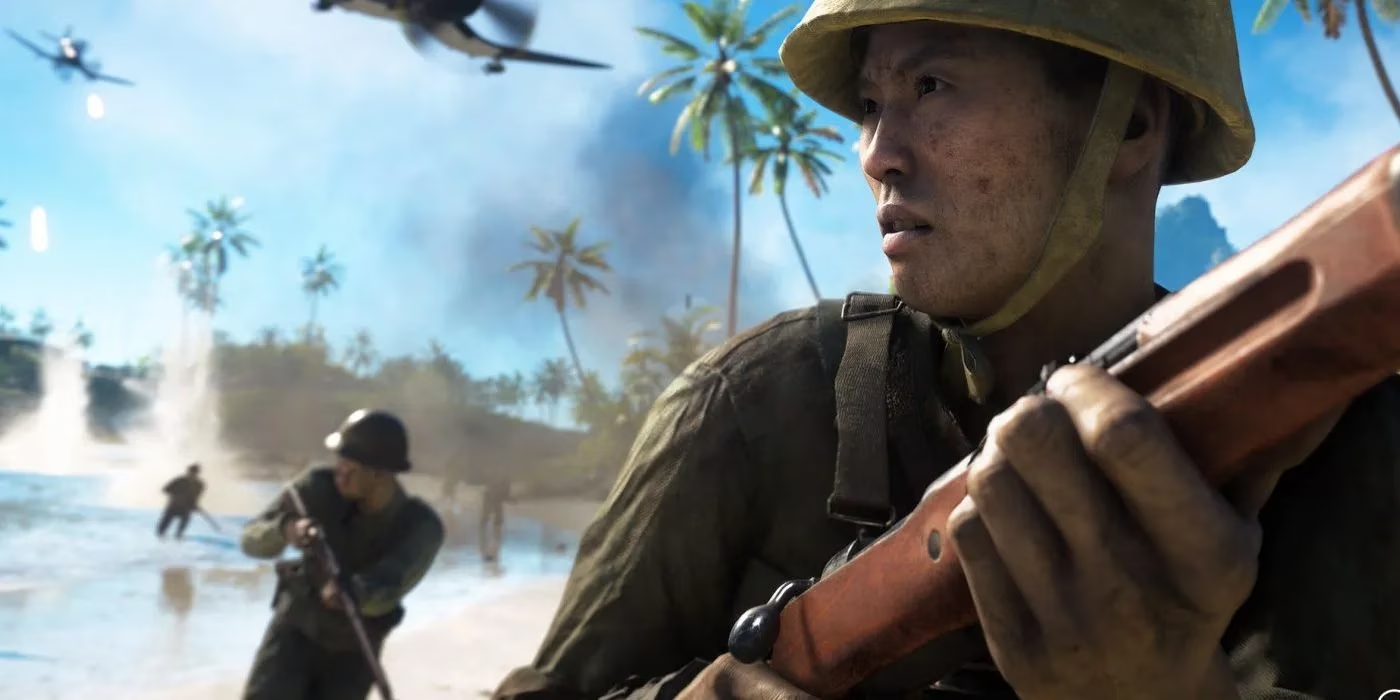
I came to Battlefield V after the loudest arguments had faded, and the Year 2 Edition is exactly the kind of bundle I wish I had found sooner. EA announced it as a digital catch-up package for newcomers, a way to hand late arrivals the rewards from the shooter’s first year without asking them to reconstruct every Chapter drop by hand. At the time, it also lined up with the release of Chapter 5: War in the Pacific, the free content drop that added a fresh front, new weapons, and new vehicles. As a player, I read that pairing as a clear signal: come for the Pacific, stay for the backlog.
📦 What the Year 2 Edition contained
The core offer was simple. The bundle included the base game, which meant both multiplayer and the single-player War Stories missions. It also included all base-game weapons, vehicles, and outfits. On top of that, it pulled together rewards from Chapters 1 through 4, which is where the catch-up value really showed.
| Bundle layer | What I would have received |
|---|---|
| Core game | Multiplayer and War Stories missions |
| Base arsenal | Base-game weapons, vehicles, and outfits |
| Chapter 1–4 catch-up | 17 primary weapons, four vehicles, two Epic soldier outfits, 10 weapon skins, and four vehicle skins |
| Chapter 5: War in the Pacific | 12 new weapons, nine new vehicles, and three new maps |
That is a lot of content for a newcomer to absorb. The Year 2 Edition sold digitally for $49.99, with a discount to $44.99 for EA Access members. I think the appeal was obvious: instead of buying the base game and then wondering what I had missed across a year of live updates, I could pick up one package and feel roughly current. For a game with as many moving parts as Battlefield V, that kind of onboarding matters.
⚠️ The context I cannot ignore
I cannot talk about the Year 2 Edition without talking about the road that led to it. Battlefield V had a rough reception after launch, and much of that reputation came from missing features, bugs, and controversy. DICE had to delay or outright cancel fixes to several of the game’s problems. The soldier-dragging feature that had been advertised never arrived. The planned 5v5 mode was cancelled. The explanation was a lack of fan interest, but from my perspective it also looked like a development cycle full of miscalculations.
The battle royale mode, Firestorm, is another example. It did not give players much reason to choose it over other battle royales, and its two-person duos mode was later removed because no one was playing it. I remember feeling that Battlefield V was constantly trying to find a shape that players would accept. Some ideas landed; others were pulled away before they had a chance to grow. That history makes the Year 2 Edition feel less like a victory lap and more like a recovery attempt.
🧭 Why Chapter 5 mattered
Chapter 5: War in the Pacific was the most important part of this moment for me. The bundle gave newcomers a backlog, but the Pacific update gave everyone a reason to log in again. Twelve new weapons, nine new vehicles, and three new maps were a meaningful package. The setting also carried a different tone from the European fronts that had dominated the game’s early identity. As a player, I found that shift refreshing. It felt like DICE was trying to meet the community where it was, rather than insisting that the original plan was enough.
At the same time, I was cautious. A single content drop cannot erase a year of frustration. The Year 2 Edition was a smart commercial idea, but it could not fix matchmaking, balance, or the lingering sense that the game had shipped before it was ready. The bundle was a doorway, not a renovation.
✅ The communication shift
One detail from this period still stands out to me: DICE said it was changing how it communicated. Instead of making promises it could not keep, the studio wanted to avoid announcing additional content drops unless it was absolutely sure they would work. In 2026, that sounds almost ordinary. Live-service players now expect roadmaps, patch notes, and clear statements about what is and is not coming. Back then, it felt like a necessary correction.
I see the Year 2 Edition as part of that correction. It was not just a product; it was a way to reset the entry point. New players could buy one bundle and get the base game, the Chapter 1–4 rewards, and a path into Chapter 5. Existing players got the Pacific update. EA got a chance to bring in fresh attention during a busy period of franchise announcements. Everyone got something, even if the something was not equally satisfying.
🎮 My 2026 perspective
Looking back from 2026, I treat the Battlefield V Year 2 Edition as a historical release rather than a current purchase recommendation. Its value was tied to a specific moment: the end of the first year, the start of the Pacific chapter, and a studio trying to rebuild trust. I would not pretend that it solved the game’s deeper problems. I would say it captured a live-service lesson that still matters: a catch-up bundle is only as good as the content it summarizes, and a communication reset is only as good as the updates that follow.
If I were describing the bundle to another late arrival today, I would frame it simply. It was a packed onboarding package with a clear price, a strong content list, and a complicated history behind it. That mixture is exactly why I find it interesting. It shows a game trying to turn a shaky first year into a more inviting second one, and it shows how much a single content drop can matter when players are deciding whether to stay.
For me, the Year 2 Edition is a reminder that recovery in games is rarely one grand gesture. It is a bundle, a patch, a new map, a quieter promise, and then the slow work of proving that the promise was real.