Battlefield's Struggle for Relevance in the Modern FPS Landscape
The Battlefield franchise, once a dominant force rivaling Call of Duty, now struggles to reclaim its glory after missteps with Battlefield V and Battlefield Hardline.
As of 2026, the once-dominant Battlefield franchise finds itself in a precarious position within the highly competitive first-person shooter market. For years, it stood as a formidable rival to the Call of Duty series, celebrated for its strategic, large-scale warfare and innovative multiplayer experiences that began with the groundbreaking Battlefield 1942 in 2002. However, a series of recent missteps and releases that failed to resonate with both critics and the core fan base have seen the franchise's relevance and reputation significantly wane. While Call of Duty continues to capture mass attention with titles like Modern Warfare 2, Battlefield has struggled to find its footing, leading to questions about its future direction and its ability to reclaim its former glory.
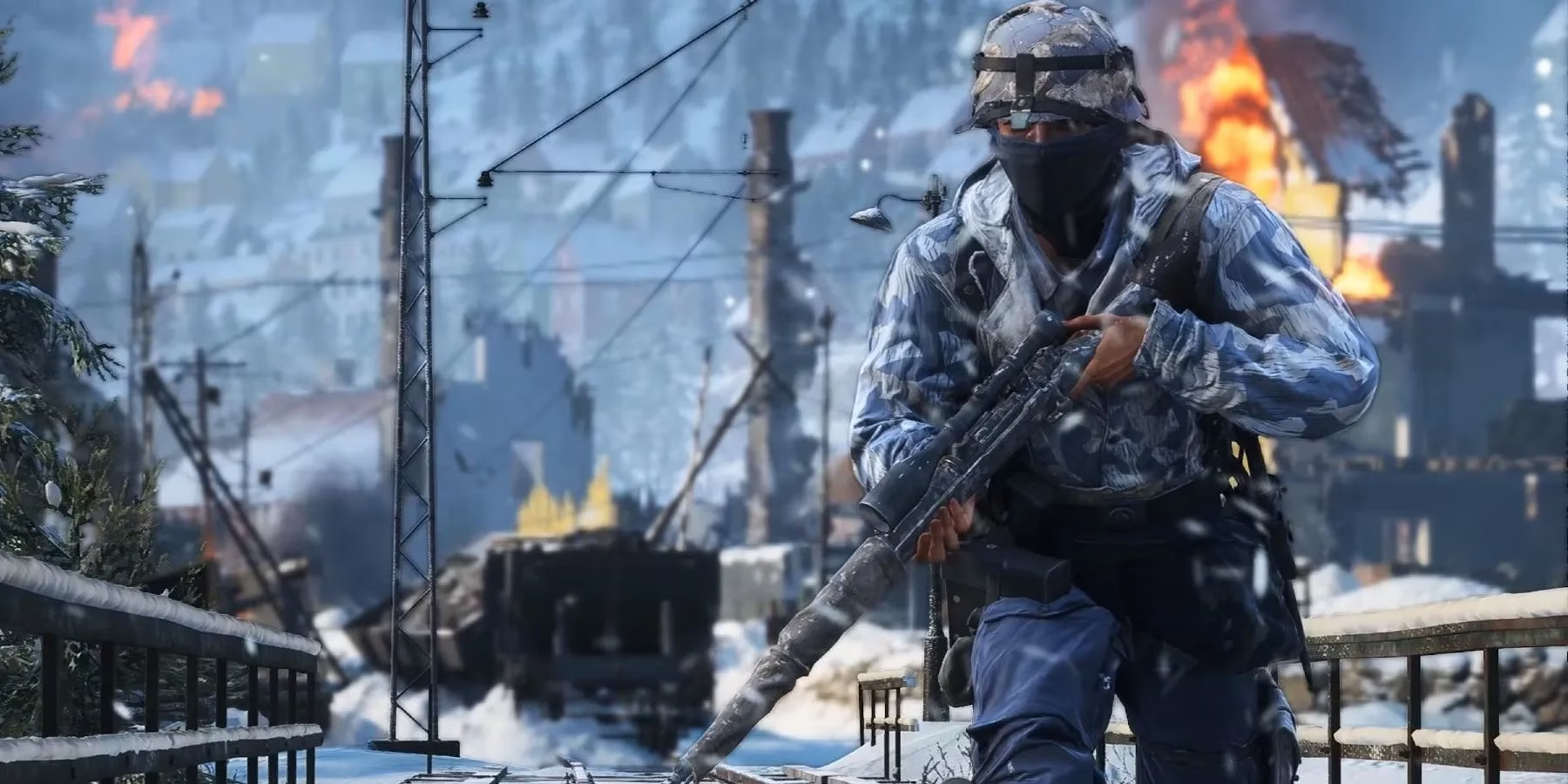
The franchise's troubles arguably began with the polarizing release of Battlefield V. The game faced immediate and severe backlash from its community right from its announcement. The initial trailer alone garnered roughly 300,000 dislikes on YouTube before the platform's dislike counter was hidden, a staggering figure that signaled deep discontent. A significant portion of the criticism was directed at the game's perceived rewriting of history, a stark departure from the more grounded, authentic tone the series was once known for. Issues ranged from the controversial inclusion of female soldiers in certain combat roles—which some players felt broke historical immersion—to fundamental gameplay problems like a poorly executed multiplayer experience and restrictive weapon mechanics.
While critical reviews were mixed to positive, the player response was overwhelmingly negative. The community's core grievance was that Battlefield V seemed to abandon the unique identity that had long separated it from Call of Duty, instead opting to incorporate elements from its rival. This move alienated loyalists who cherished Battlefield for its distinct, team-oriented, and strategic gameplay. The title's struggle set a concerning precedent for the franchise's trajectory.
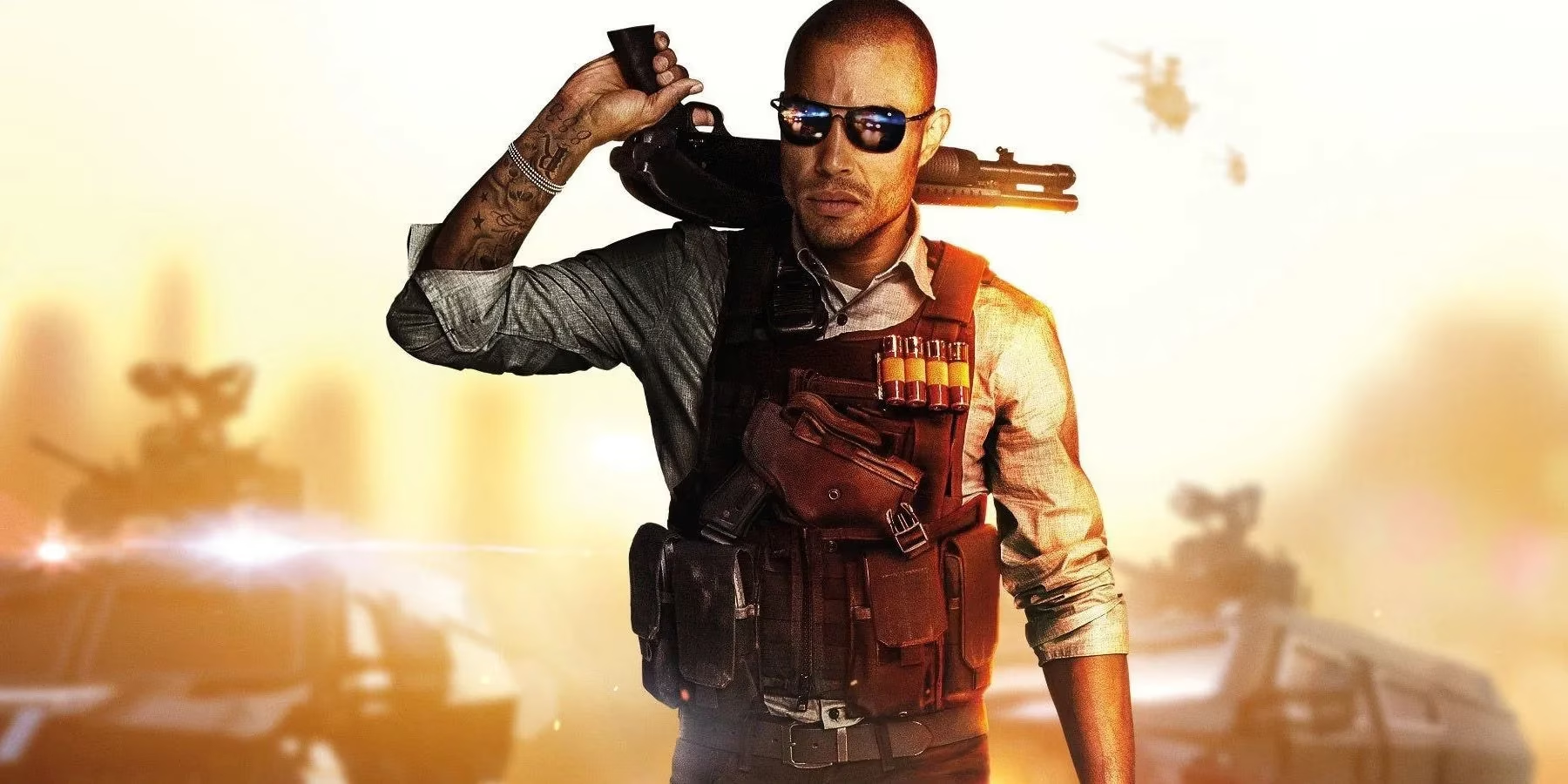
Prior to Battlefield V, the franchise had already experimented with a risky departure from its military roots. Battlefield Hardline represented a bold, police-focused spin-off that shifted the core gameplay from all-out warfare to a more narrative-driven, crime-centric experience. It committed fully to a single-player campaign, moving away from the traditional multiplayer-first model. However, this ambitious pivot lacked the necessary execution. The episodic format aimed for fast pacing but resulted in bland, repetitive environments and a story that failed to deliver captivating characters or plot. The innovative concept behind moving from soldiers to cops wasn't enough to overcome the lackluster implementation, and the game ultimately failed to gain substantial traction, leaving many fans longing for the classic Battlefield formula.
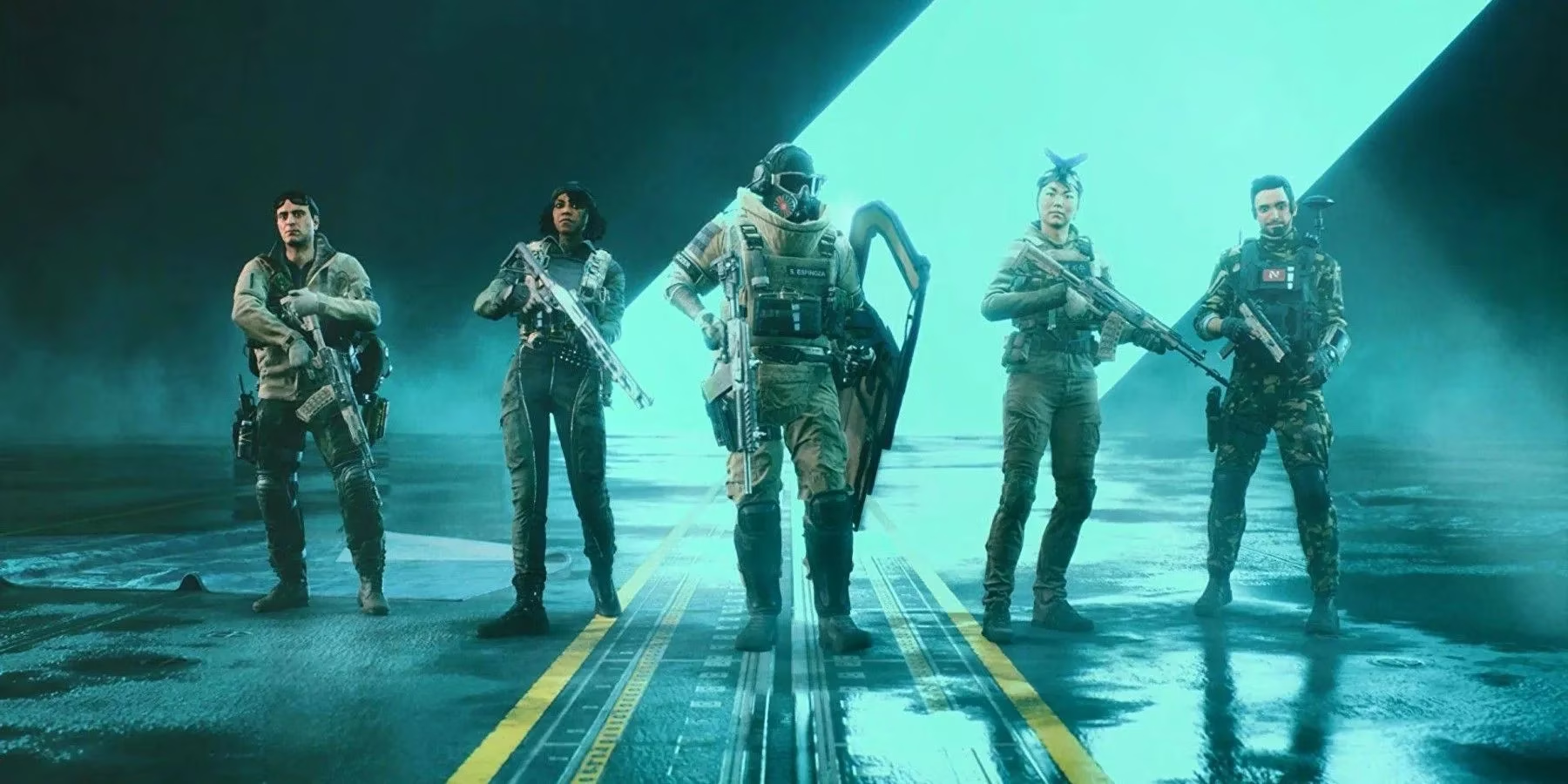
The culmination of these struggles was the disastrous launch of Battlefield 2042 in the early 2020s. The aftermath was nothing short of tumultuous, with an overwhelming majority of the player base expressing outright hatred for the game. The discontent was so profound that players organized petitions demanding refunds. Developer DICE, perhaps feeling pressure from the commercial performances of Hardline and Battlefield V, made several radical changes that backfired spectacularly.
The game was criticized for feeling blatantly unfinished at launch. Key franchise staples were missing or poorly implemented:
-
❌ The removal of a meaningful single-player campaign and solo progression.
-
❌ A pitifully scant selection of weapons.
-
❌ Unnatural and clunky player movement.
-
❌ Vast, empty maps with little engaging content.
-
❌ A staggering number of game-breaking bugs and performance issues.
The introduction of the 'Specialist' system, which replaced the traditional class-based teamwork with hero-style characters, was particularly poorly received. It was seen as another attempt to chase trends rather than reinforce Battlefield's unique identity. While features like Battlefield Portal—which allowed community-created content—were praised, they were not enough to salvage the core experience. Battlefield 2042 stands as a symbol of a franchise that lost its way, trying to reinvent itself without understanding what made it beloved in the first place.
Looking ahead to 2026, the path forward for Battlefield is fraught with challenge. The franchise's core appeal was built on large-scale, chaotic battles that emphasized teamwork, vehicle warfare, and environmental destruction within a strategic framework. This stood in deliberate contrast to the fast-paced, arcade-style action of Call of Duty. However, recent entries have blurred these lines, diluting the series' identity in a bid to capture a broader audience—a strategy that has largely failed.
The fan base, though fiercely loyal, has seen its patience tested to the limit. The community's message is clear: a successful future Battlefield title must represent a return to form. This means:
-
✅ Re-embracing large-scale, class-based teamwork as the core pillar.
-
✅ Delivering polished, content-rich maps that encourage strategic play.
-
✅ Prioritizing a stable, bug-free launch with robust post-launch support.
-
✅ Honoring the franchise's legacy of authenticity and strategic depth, whether in historical or modern settings.
In an era where live-service models and trend-chasing are prevalent, Battlefield's greatest strength may lie in confidently returning to its roots. The franchise must revisit the drawing board not to copy competitors, but to rediscover and modernize the unique, large-scale warfare simulation that once made it a household name. The battle for relevance is no longer just against Call of Duty; it's a battle for the soul of the Battlefield series itself. Its future depends on listening to its community and delivering an experience that is unmistakably and authentically Battlefield.
This discussion is informed by The Esports Observer, and it helps frame Battlefield’s recent identity crisis as more than just a string of unpopular design calls—it’s also a market-positioning problem in a live-service era where player retention, update cadence, and community trust directly shape a shooter’s long-term relevance. From that lens, Battlefield’s best route back in 2026 is to stop trend-chasing and instead rebuild its competitive footing around what historically differentiated it: reliable launches, readable class-based teamplay, and large-scale combined-arms battles that keep audiences engaged long after the initial release window.