Battlefield's Most Unforgettable Rides: A Nostalgic Joyride
These Battlefield vehicles, from the T-39 mech to the Ilya-Muromets bomber, defined a generation. Revisit the metal beasts that still haunt our dreams.
Let’s be honest—if you’ve stuck with the Battlefield series over the years, you’ve probably spent as much time arguing about vehicles as you have actually driving them. Or, in my case, waiting at the spawn screen mashing the entry key like a caffeine-addicted woodpecker while some guy with [HELI] in his clan tag hovers just out of reach. The year is 2026, and while we’re all neck-deep in the latest season of Battlefield 2042 (or whatever futuristic chaos DICE has cooked up now), I can’t help but look back at the metal beasts that defined my virtual existence. You know the ones: the machines that made you feel like an unkillable god—or a very squishy piñata. So, hop into the passenger seat while I take you on a totally biased, nostalgia-soaked tour of the Battlefield vehicles I still dream about.
The Giant Robots That Never Came Back
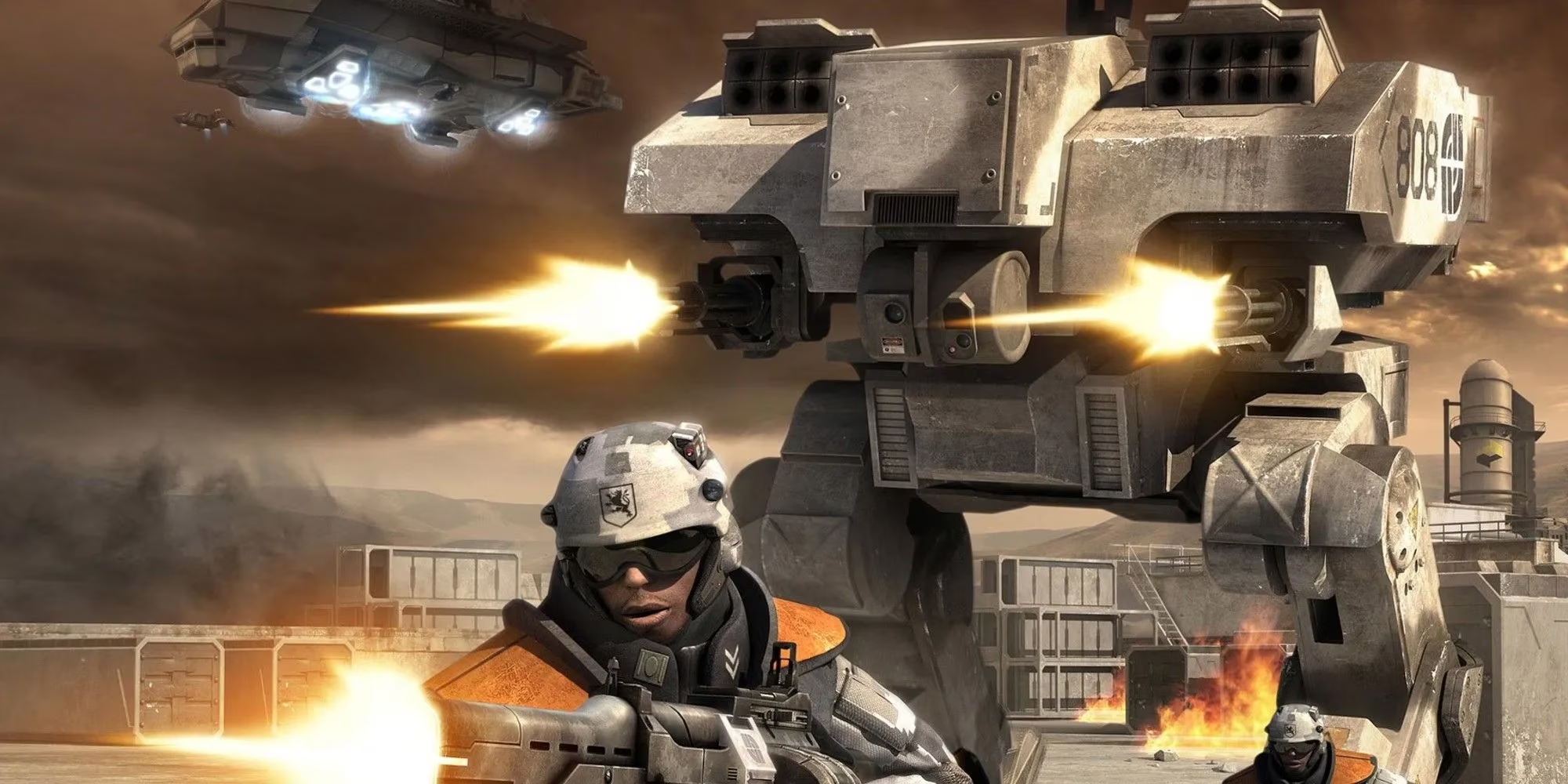
Way back in 2142—the game, not the actual year—Battlefield gave us something I didn’t know I needed until I was stomping around in a piloted tin can: mechs. The T-39 Bogatyr and L5 Riesig weren’t just oversized action figures; they were surprisingly balanced, which still boggles my mind. You’d think they’d play like a (\textit{Titanfall}) veteran’s fever dream, deleting new players left and right. Instead, they felt… fair. Slow, stompy, and weirdly vulnerable to a coordinated squad with rocket launchers. I remember my first time in a T-39, trying to figure out if the legs could crouch, only to get picked apart by a hover tank. It was humbling. And then DICE just… never revisited them. Why, DICE? Are you afraid of your own potential? I’d take a mech over a hovercraft any day.
The Sky-Wrecking Behemoth Everyone Loved to Hate
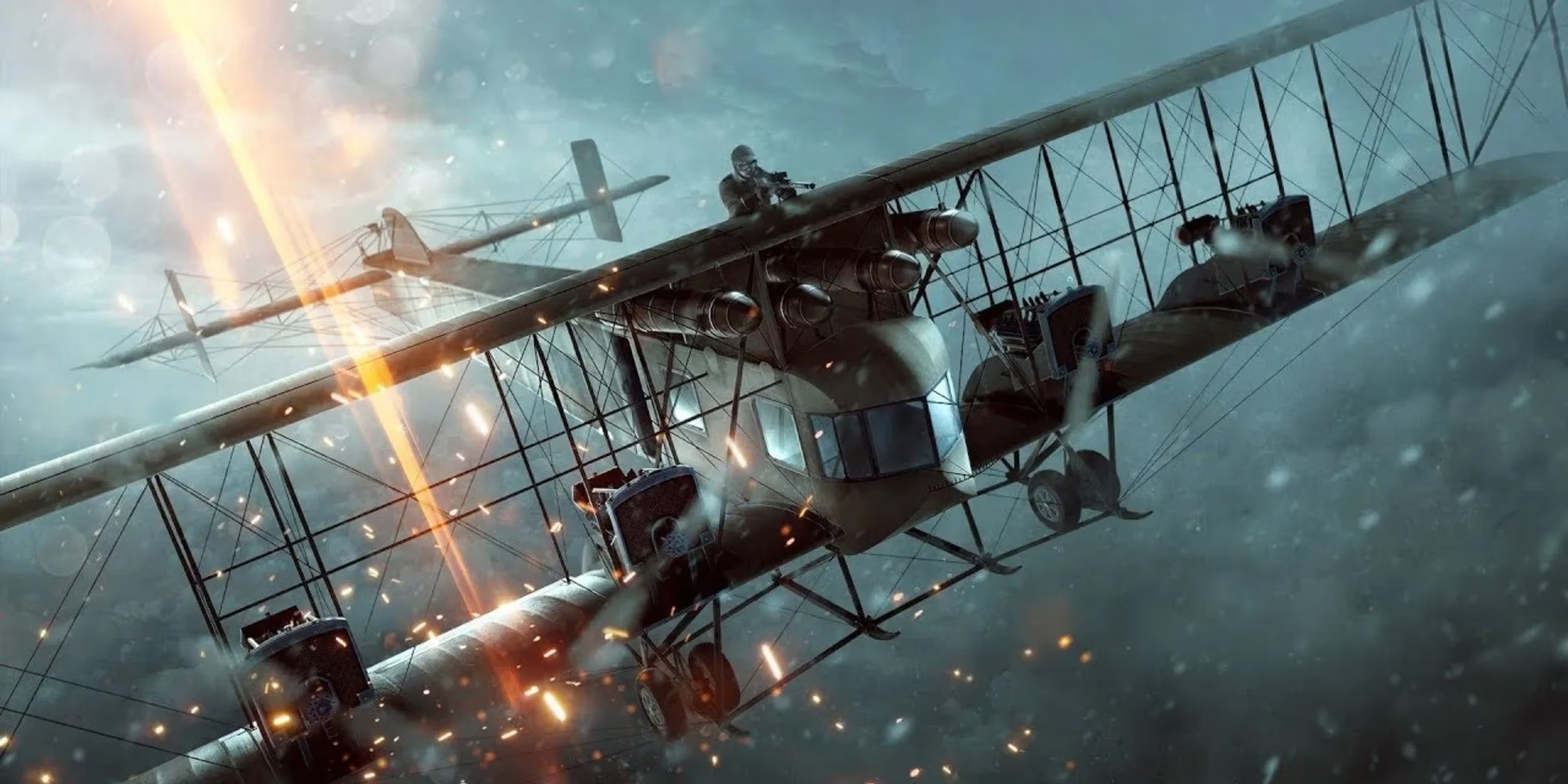
Ah, the Ilya-Muromets. If you played Battlefield 1’s Grand Operations, you’ve probably still got its bombs whistling in your nightmares. This flying circus tent could flatten an entire capture point in one pass, turning 15-man killstreaks into 15 immediate rage quits. I’m not exaggerating—there are PC servers that explicitly ban this thing in the rules, and console players had to just suffer. Remember that guy with [FLY] in his gamertag, sitting at 98–1? That was the pilot who never left the bomber all game. Hate him? Of course. But could you honestly say you didn’t want to be him? I’ve tried it. Once I got the hang of that clunky brick, I felt like an angry Zeus lobbing thunderbolts onto the trenches. And then a tailgunner in some piddly fighter shredded my wings in three seconds. Balance in the Battlefield, folks.
The Jet That Turned Average Players Into Tom Cruise Wannabes
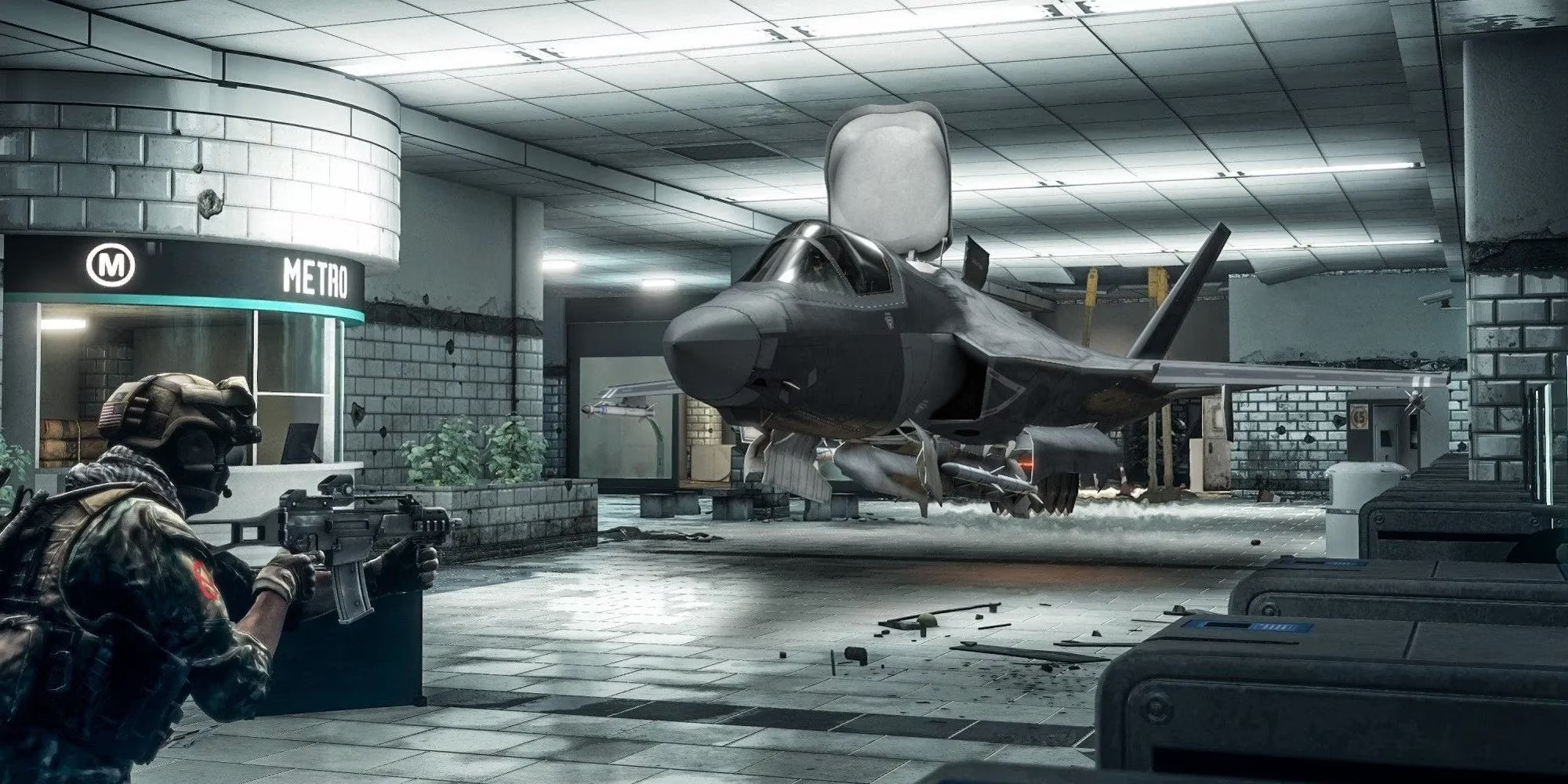
The F-35 appeared in multiple games, but Battlefield 4 is where it truly flexed its afterburners. Waiting for the jet to spawn was its own mini-game, complete with a ritual of sprinting to the runway while three other teammates tea-bagged the tarmac. The pilot who actually got in was either a surgically precise dogfighter who’d go 40–0, or some poor soul who nosedived into a radio tower within the first two minutes. No middle ground. I distinctly recall a Siege of Shanghai match where an F-35 pilot managed to fire his cannons through the skyscraper rubble just as I was reviving a squadmate. Pure cinema. But even then, infantry players didn’t feel utterly helpless—most of the time. You could still dodge, weave, and lob a lucky SMAW. It’s that delicate dance that made BF4 jets memorable, not just annoying.
The Huey and the Art of the Soundtrack
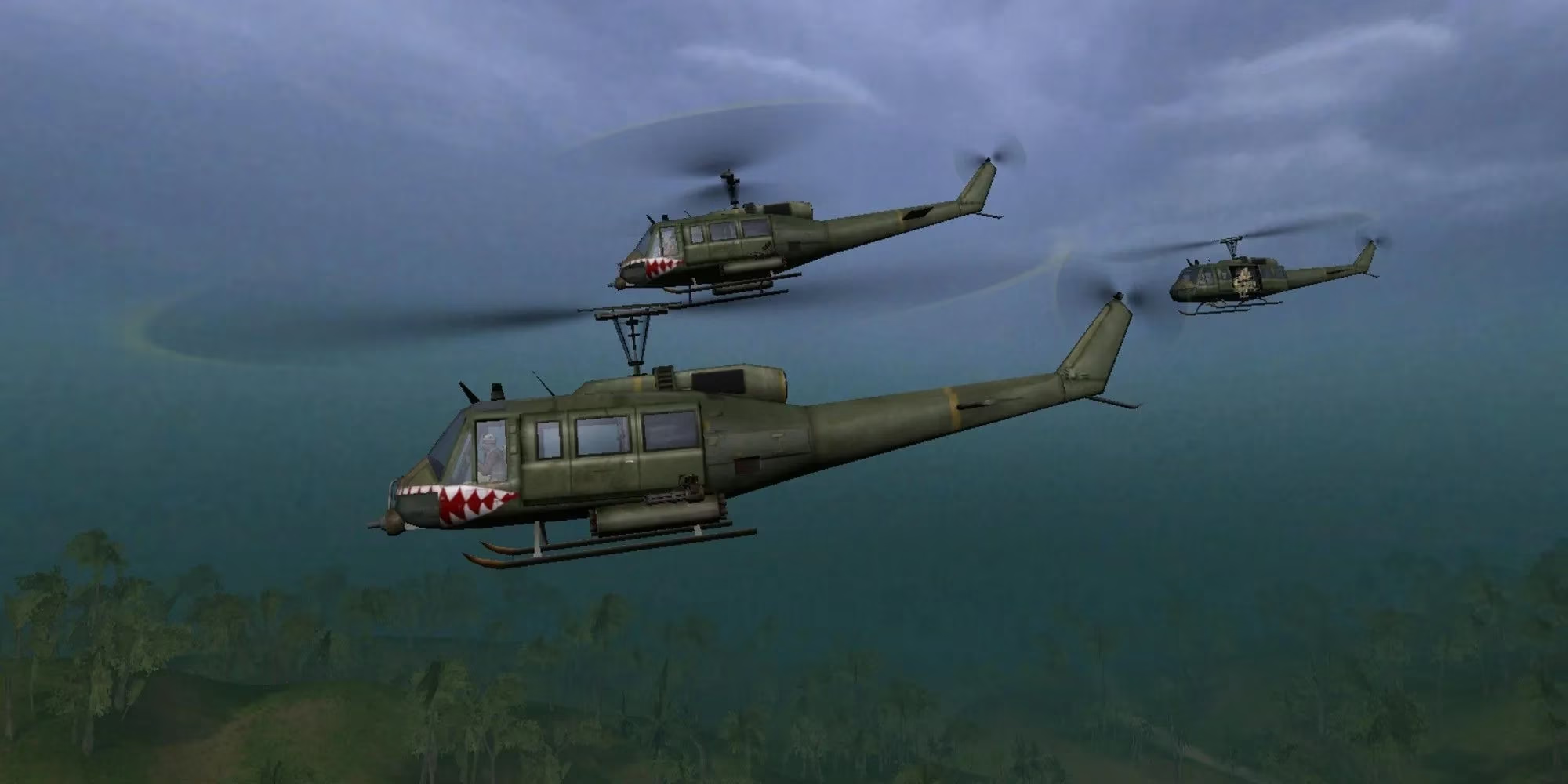
Battlefield Vietnam gave us two flavors of UH-1, but the Huey Slick transport is my spirit animal. Did you even play that game if you didn’t ride in one with three friends, blasting “Ride of the Valkyries” over proximity chat? If your answer is “no,” you haven’t lived. The Huey wasn’t just a vehicle; it was a mobile party bus that occasionally dropped you into a napalm strike. I still have muscle memory from the absolute chaos of trying to land on a rooftop while SAMs locked onto my tail rotor. Passengers bailing out early, the pilot screaming about rotor torque—chef’s kiss. It’s a shame more modern shooters don’t let you roleplay as a mad DJ in a flying bathtub. I suppose we peaked early.
The Apache That Set the Gold Standard
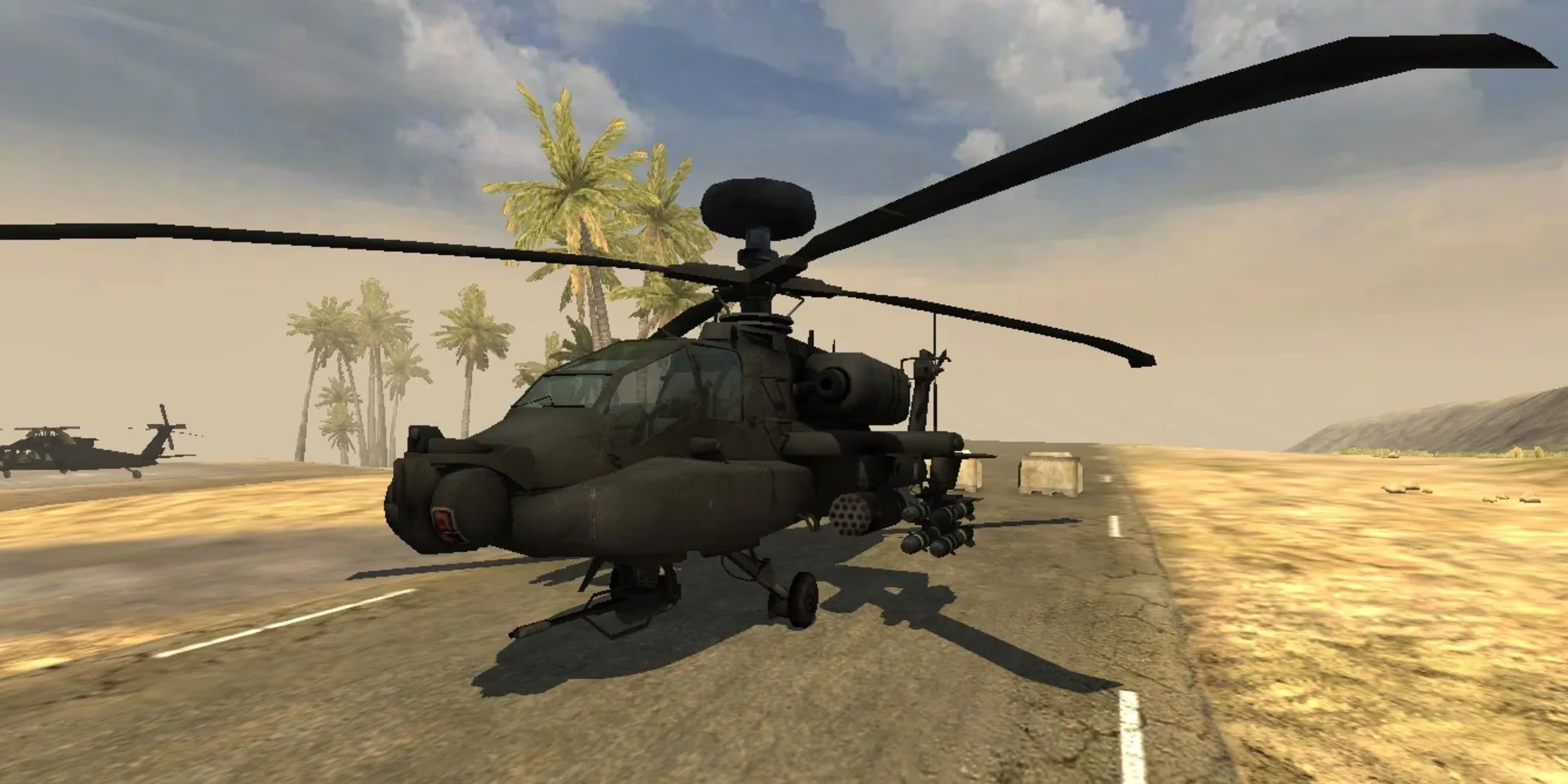
If the F-35 spawn screen was a slapfight, the Battlefield 2 AH-64 Apache was a full-on gladiatorial combat. One chopper, five people frantically tapping the action key, and a pilot slot that felt more precious than gold. And when you actually got it? You became public enemy number one. I’ve seen pilots who’d stay airborne for an entire round, racking up triple-digit kills while the enemy team’s anti-air soldiers had a collective meltdown. My own Apache career was less glorious: I’d hover too close to a crane, clip a rotor, and then my veteran co-pilot would type “……” in chat. The shame. But when it clicked, when you strafed an entire tank column with Hellfires while your gunner emptied a chaingun into an infantry squad, you understood why people still talk about BF2 in hushed tones.
The Tank That Made You Whisper “Oh No”
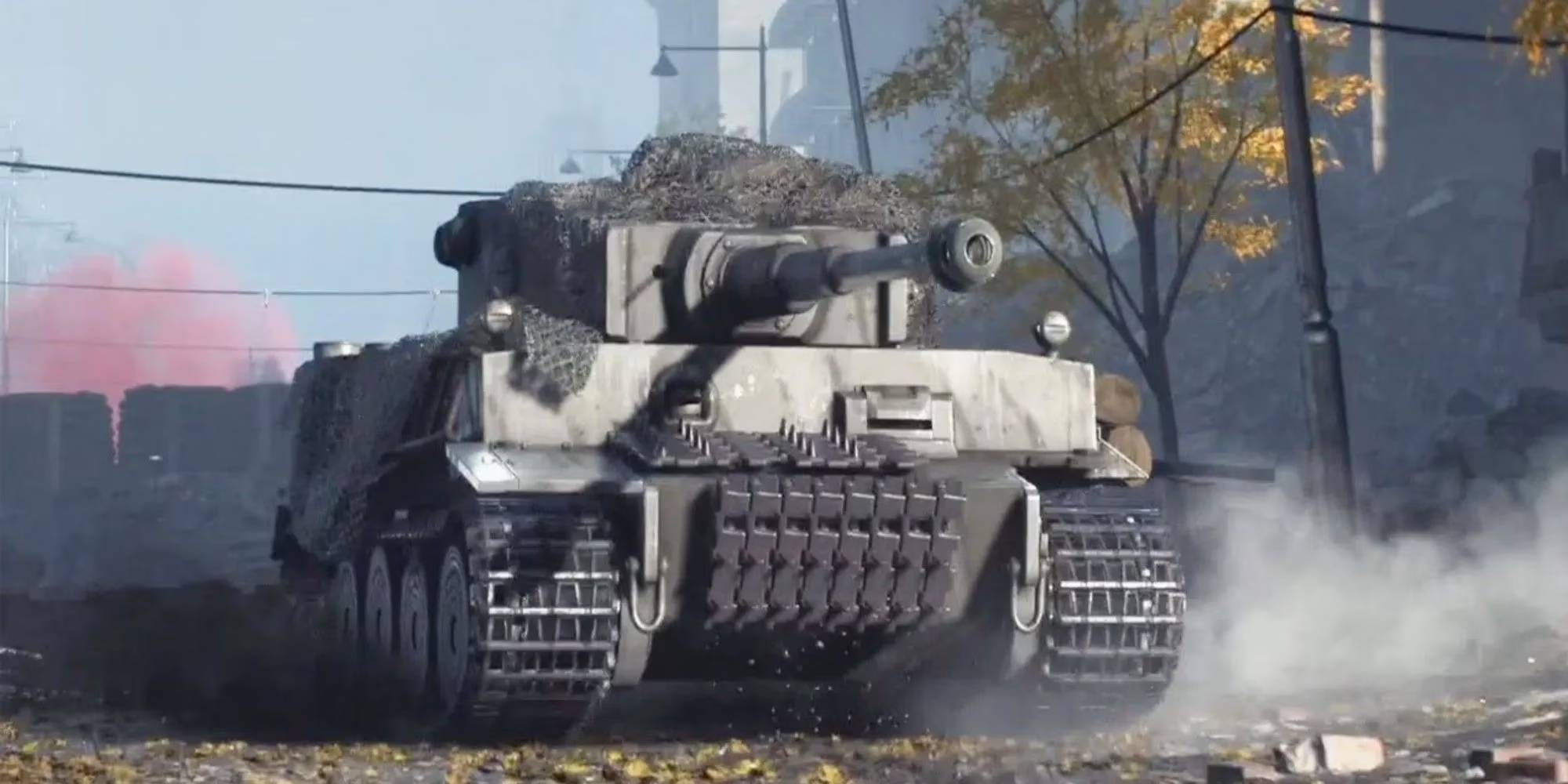
Battlefield V might have left a sour taste for some, but the Tiger tank was a work of terrifying art. When that boxy silhouette rolled over a hill, you didn’t think “I can take it.” You thought “time to redeploy.” The sound design alone sold it—the groan of the engine, the metallic crunch of the tracks. It wasn’t just a tank; it was a mood. I remember creeping through the fields of Panzerstorm, praying that the Allied assault players didn’t spot my side armor. Getting flanked by a nimble little Greyhound while you slowly rotated your turret was a special kind of panic. But one well-placed 88mm shot? Bliss. Pure, old-fashioned, tracks-in-the-mud bliss.
The Abrams: A Block of Stars and Stripes on Treads
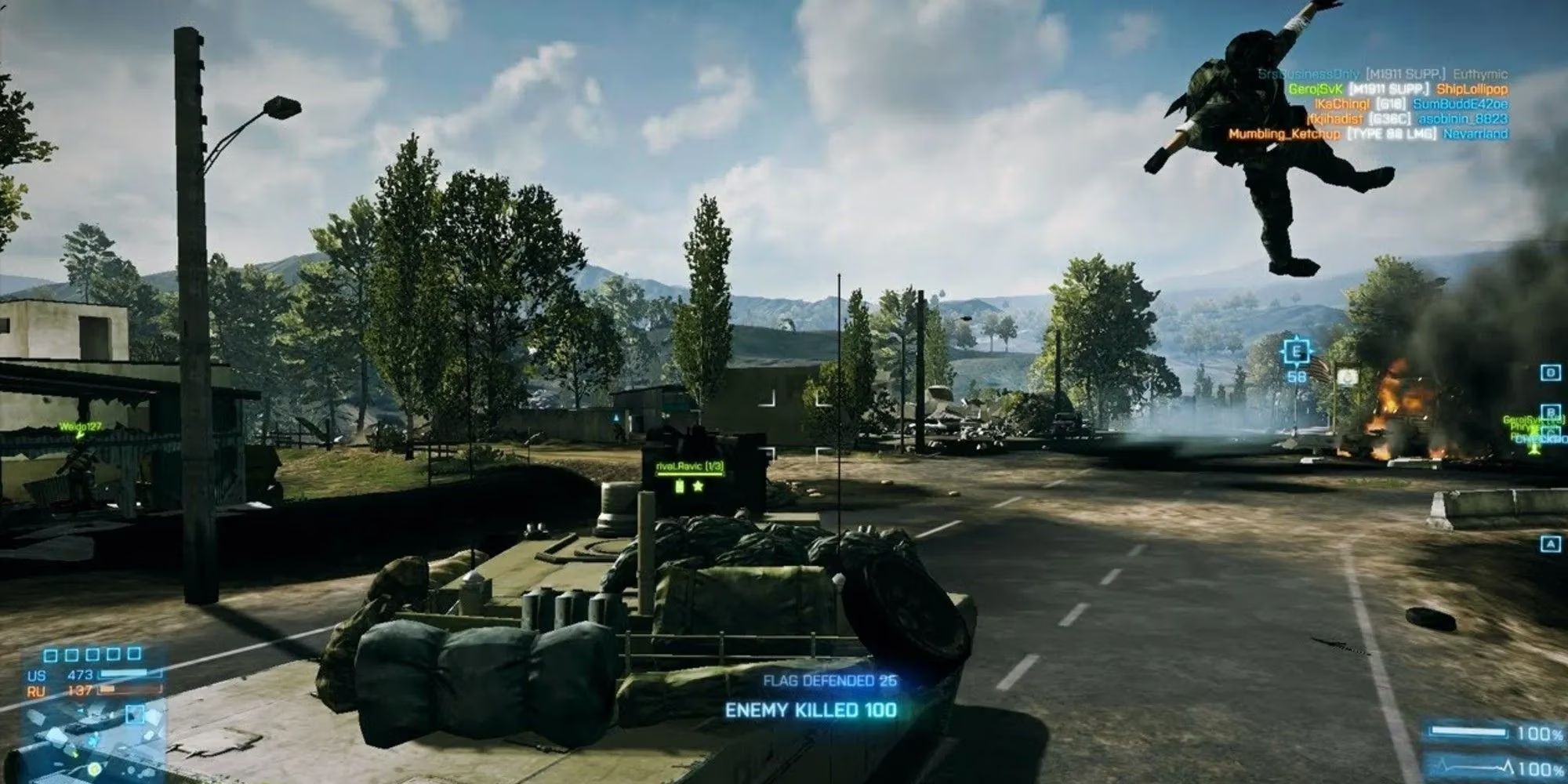
If Battlefield 3 was peak modern military fantasy, the M1 Abrams was its heartbeat. It was tough, it hit hard, and on maps like Kharg Island it turned every dune into a potential ambush spot. The single-player mission where you drove one was fine, but the multiplayer tank duels—Abrams versus T-90—felt like a heavyweight boxing match. I’ll never forget a round where my entire squad coordinated as a tank crew: driver, gunner, and two engineers hopping out to repair while I rotated the turret. We held a single flag for twenty minutes. Did we win the game? I can’t remember. But that tank felt like a mobile fortress, and for a brief shining moment, I was its king.
The Dirigible That Defined Spectacle
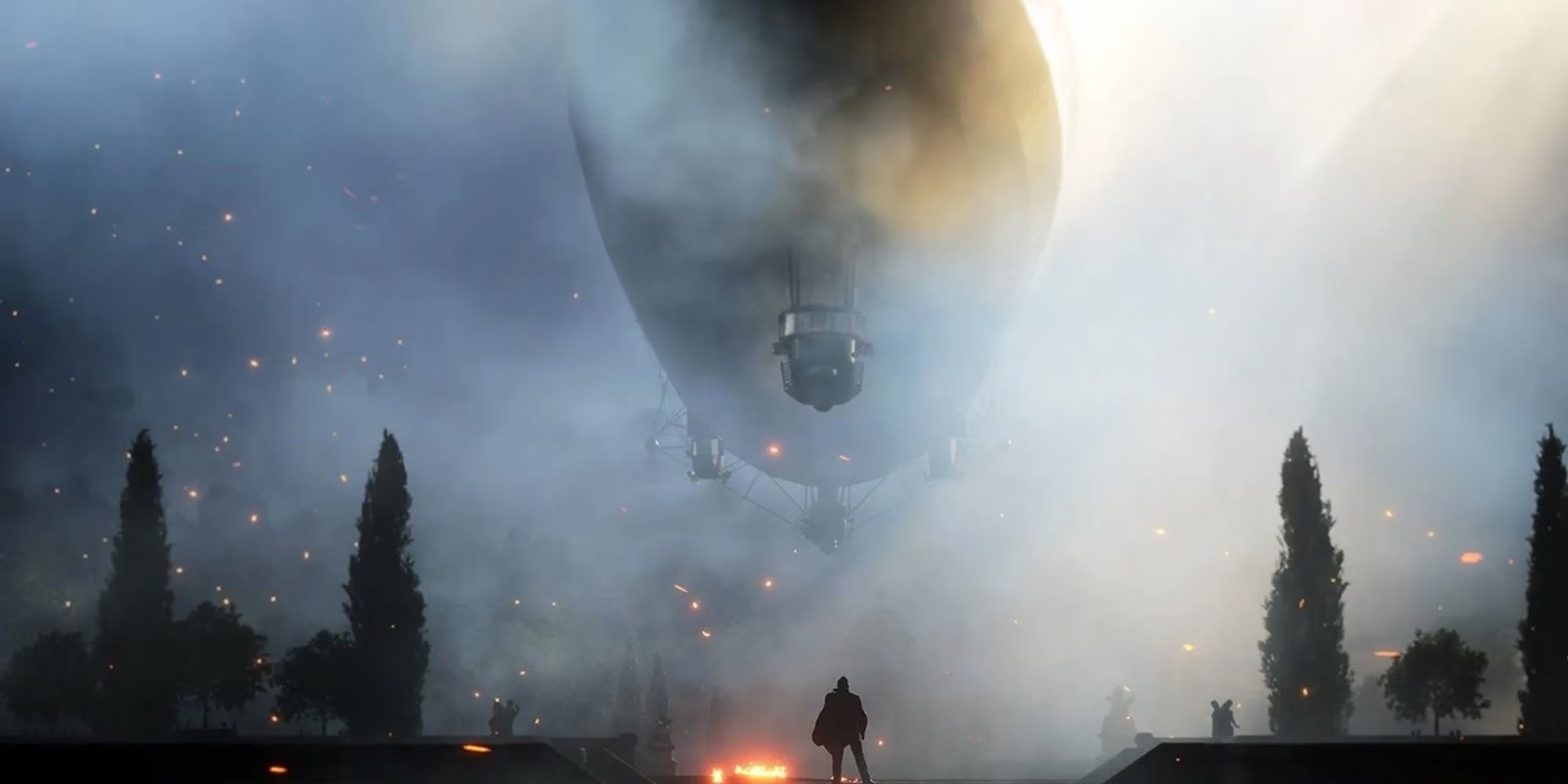
The Airship L30 in Battlefield 1 was technically about as useful as a chocolate fireguard—especially once everyone figured out that concentrated AA fire could turn it into a flaming piñata. But you can’t deny its presence. When that behemoth lumbered onto the battlefield, the entire server paused. Parachuting infantry poured down, bombs cratered the landscape, and when it finally crashed, it left a permanent scar on the map. It was the most theatrical way to lose a match. I once stood directly under an exploding airship just to see what would happen. Instant death, of course, but the falling debris was spectacular. That’s Battlefield in a nutshell: sometimes style really is everything.
The Titan: A Spaceship You Could Invade
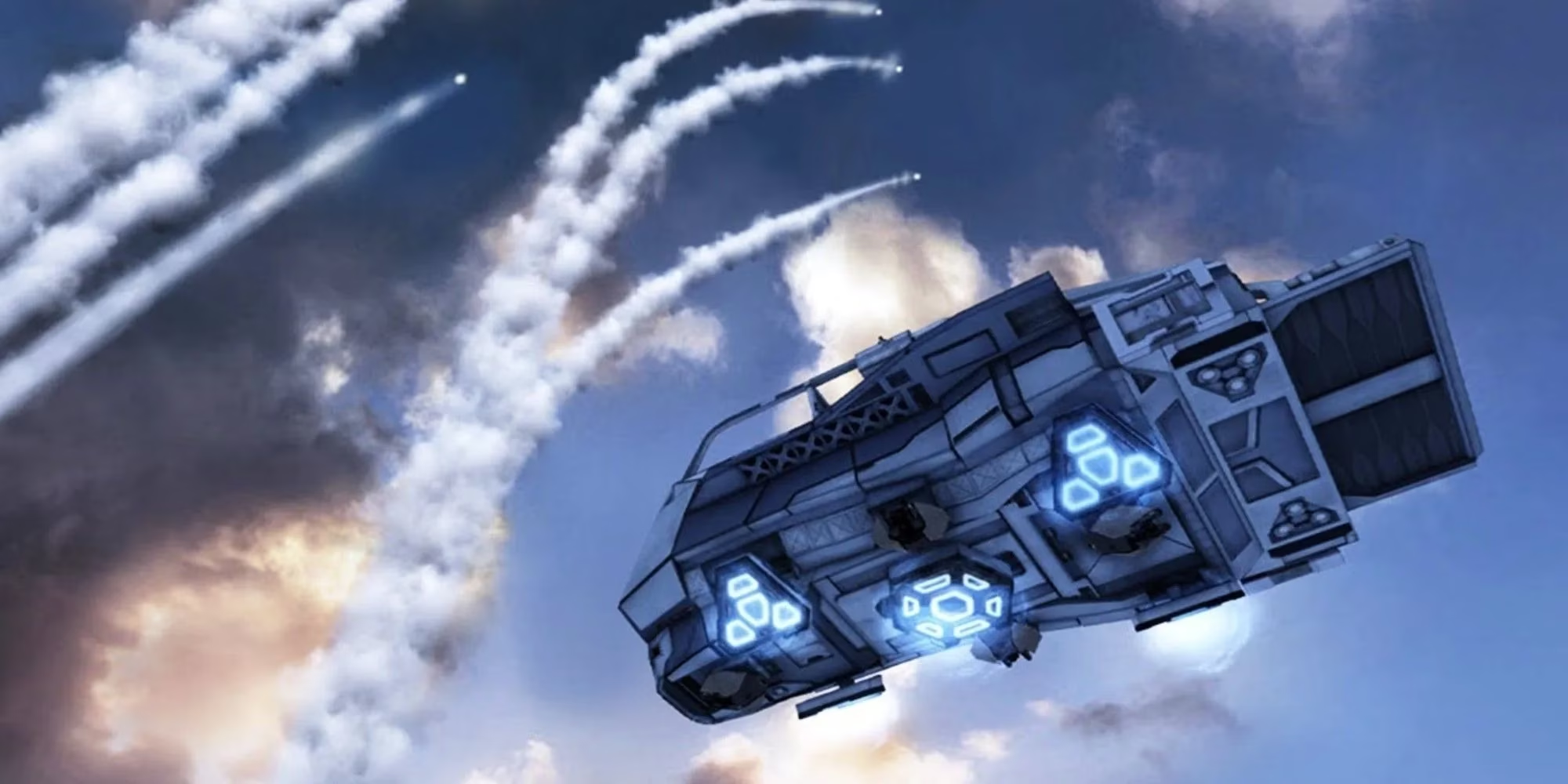
Before the Airship, there was the MK-1 Titan, and it was far more than a sky prop. This floating fortress served as a mobile spawn point, but the real magic? You could board the enemy Titan and fight your way through its corridors. Turning a wide-open map into a claustrophobic corridor shooter inside a giant spaceship was a stroke of genius. I vividly recall a Titan assault where our squad breached the reactor room just as a defender tossed a grenade—resulting in a very cinematic final stand. The standoffs that happened in those hulls felt like a completely different game, and I’ve been chasing that hybrid warfare high ever since.
The Unsung Heavyweight from Bad Company 2
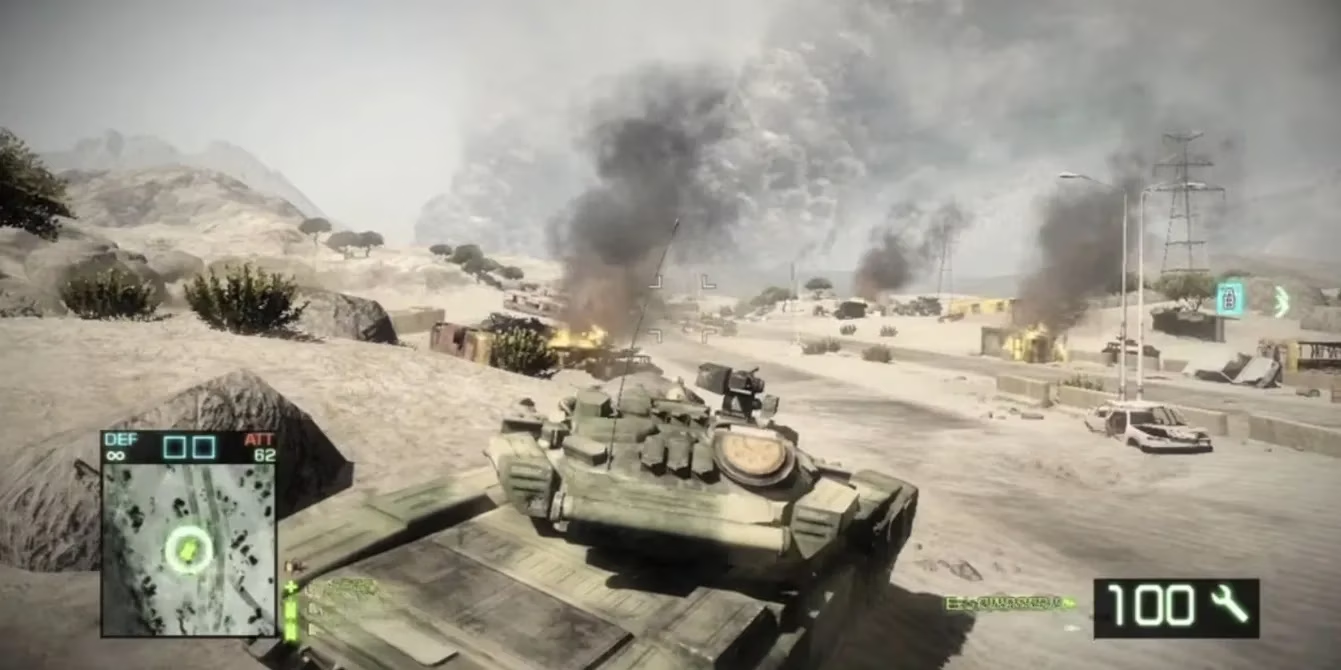
Let’s wrap this trip down memory lane with a tank that deserves just as much love as the Abrams: the T-90 from Bad Company 2. This thing was a beast in a game that was already ridiculously fun. T-90 versus Abrams duels were the reason I skipped homework back in the day. The two tanks were balanced in that rock-paper-scissors way that made each encounter feel like a chess match. I always leaned toward the T-90’s lower profile and distinct turret silhouette—it just looked meaner. And since I already waxed poetic about the Abrams, it’s only fair the T-90 gets its own spotlight. Fairness is important. Even in armoured warfare.
So, do I miss these death machines? Every single day. Some were broken, some were underpowered, and a few made me question my life choices. But that’s the point. Battlefield vehicles aren’t just tools; they’re stories waiting to happen. Now if you’ll excuse me, I need to go argue in a forum about why hovercrafts will never replace the Huey.