Battlefield's Buggy Legacy: From 5's Invisible Guns to 2042's Lingering Woes
Battlefield 5 bugs and Battlefield 2042 glitches create remarkable chaos, sparking vibrant community discussions and lasting franchise impact.
In the ever-evolving landscape of first-person shooters, few franchises have experienced a rollercoaster of player sentiment quite like Battlefield. As of 2026, the community's journey often feels like a boomerang, repeatedly circling back to older titles as newer releases struggle to find their footing. The saga that began with Battlefield 2042's notoriously rocky launch in late 2021 has become a modern cautionary tale in the industry, but veteran players know this isn't the series' first rodeo with a disastrous debut. The ghosts of launches past, particularly Battlefield 5 from 2018, serve as a hauntingly familiar echo, reminding everyone that a smooth release for this franchise is as rare as a perfectly balanced match.
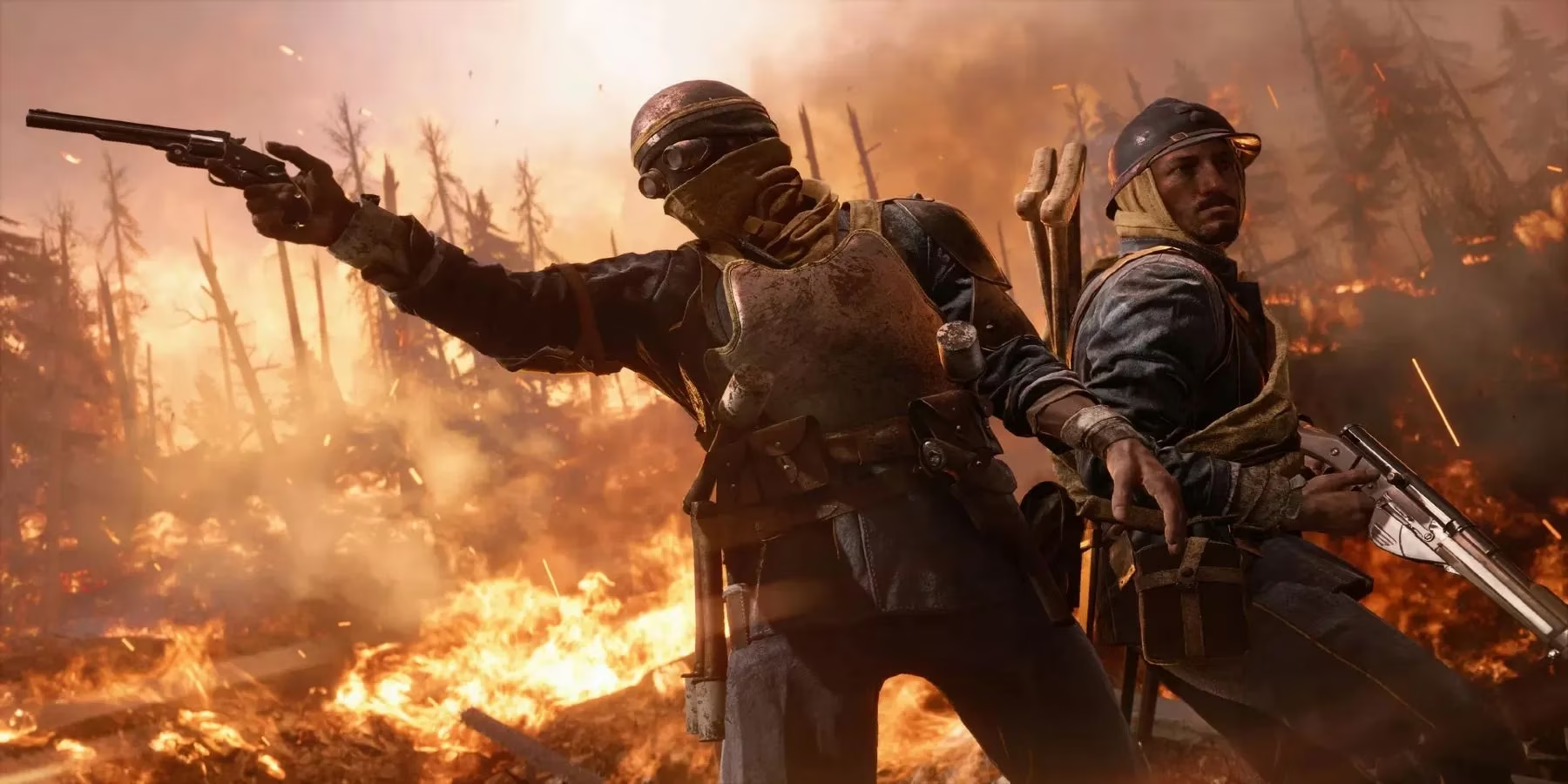
A Glitch in Time: The Enduring Legacy of Battlefield 5's Bugs
While Battlefield 2042's problems dominated headlines, a look back at Battlefield 5 reveals a shared DNA of technical turmoil. A classic clip, originally captured shortly after the 2018 title's release and still circulated today, perfectly encapsulates this. It shows a player swapping their shotgun for one found in the environment, only to be armed with a weapon that has failed to load its model properly. The player is left holding what appears to be a gun's stock and two shells awkwardly protruding from what looks like half of a firing mechanism—a visual glitch that turned a deadly weapon into a surreal piece of abstract art, floating in the player's hands like a ghostly afterimage of developer intent. Despite its broken state, the phantom firearm somehow functions, allowing the player to dispatch two AI enemies before performing a reload animation so bizarre it out-goofed the series' own famous secret easter eggs.
This wasn't an isolated incident. At its launch, Battlefield 5 was besieged by a litany of issues that led to a significant community backlash. The situation grew so dire that memes from the era ironically suggested players abandon the World War II shooter and return to Star Wars Battlefront II—a game that had itself faced immense controversy—in search of a more stable experience. It was a moment where the gaming community's patience was stretched thinner than a sniper's crosshair hair, showcasing how quickly player goodwill can evaporate.
The 2042 Quagmire: Beyond Cosmetic Glitches
Fast forward to Battlefield 2042, and the problems evolved from quirky visual bugs into fundamental gameplay fractures. The issues present in the 2021 title extended far beyond the realm of minor graphical inconsistencies that plagued its predecessor.
-
Core Gameplay Breakdown: Vehicles began behaving with the unpredictable physics of a shopping cart with a broken wheel, careening and glitching through maps.
-
Unreliable Combat: Takedown animations would bug out, leaving characters frozen in mid-action, while weapons routinely failed to register hits accurately, making firefights feel like a frustrating game of chance.
-
Performance Pitfalls: Players frequently reported crashes, severe frame rate drops, and persistent server issues that made consistent play nearly impossible.
In this context, the idea of an invisible weapon from Battlefield 5 seemed almost quaint. Battlefield 2042 players likely wished that such a minor visual hiccup represented the peak of their in-game woes. Instead, they were dealing with a core experience that felt, at times, as stable as a house of cards in a wind tunnel.
A Shift in Identity: The Tone-Deaf Evolution
Perhaps the most divisive change, and one that continues to be debated in 2026, was the stark tonal departure. Historically, Battlefield titles were known for a mature, earnest—if dramatized—depiction of large-scale warfare. Battlefield 2042 pivoted sharply towards a more lighthearted, character-driven hero-shooter model, taking clear inspiration from games like Overwatch and Team Fortress 2.
| Classic Battlefield Tone | Battlefield 2042's Approach |
|---|---|
| Gritty, large-scale warfare simulation | Hero-focused, personality-driven action |
| Anonymous soldiers representing factions | Unique "Specialists" with named identities and quips |
| Grounded (if exaggerated) military aesthetic | Flashy, near-future gadgetry and vibrant skins |
This shift, widely seen as an attempt to create a more lucrative ecosystem for cosmetic microtransactions, backfired with a significant portion of the core fanbase. The development team struggled to make these new hero-shooter elements feel congruous with the established tone of the series. The gritty, team-oriented chaos that defined Battlefield now shared space with quippy specialists and vibrant cosmetics, creating a tonal dissonance that felt as jarring as a polka band playing in the middle of a symphony. For many, the soul of Battlefield had been diluted, repackaged into a format that prioritized market trends over cohesive identity.
The Road to Redemption? A Community Divided
Years later, the legacy of both games is complex. Battlefield 5, after extensive post-launch support, is remembered more fondly, with its concurrent player counts often rivaling or surpassing the newer 2042 well into the mid-2020s. It stands as a testament to the idea that a troubled game can recover, its early flaws becoming humorous footnotes rather than fatal flaws.
Battlefield 2042, meanwhile, underwent its own long and arduous journey of updates, reworks, and community management. By 2026, the game is in a vastly improved state from its launch version. However, the shadow of its first year lingers. The exodus of players at launch created a momentum that was incredibly difficult to rebuild. The game serves as the industry's go-to example of how a poor launch can cripple a live-service title's long-term prospects, regardless of later improvements. It became a lesson in managing expectations and the fragile trust between developers and players—a trust that once broken, mends slower than health regeneration without a medkit.
Ultimately, the tales of Battlefield 5 and Battlefield 2042 are intertwined chapters in the same ongoing story. They highlight a recurring cycle within the franchise: ambitious launch, technical stumble, community outrage, and a long road of patches. As the series looks to its future beyond 2026, the hope among fans is not for a perfect game at launch—history suggests that's a fantasy—but for a foundation solid enough that the inevitable post-launch polish feels like refinement, not reconstruction from the ground up. The community has shown remarkable resilience, but their patience, much like a contested flag in Conquest, can only be held for so long under constant pressure.