Battlefield 6: Why Going Back to Modern Combat Was Always the Right Call
Battlefield 6 needs modern settings and weapon customization to recapture Battlefield 3 and 4's dynamic, fan-favorite gameplay.
I remember the strange in-between period before Battlefield 6 was officially shown. Everyone had an opinion, most of them boiling down to one demand: give us Battlefield 3 and 4 energy again. It wasn't just nostalgia; it was a reaction to two consecutive historical games. After World War I and World War II, many fans like me were tired of muzzle-loaders, bolt-action rifles, and maps locked to real 20th-century battlefields. In 2026, looking back, the argument holds up better than ever. If the next Battlefield wants to keep players hooked, modern or near-future settings and deep weapon customization aren't optional—they're core to the series' identity.
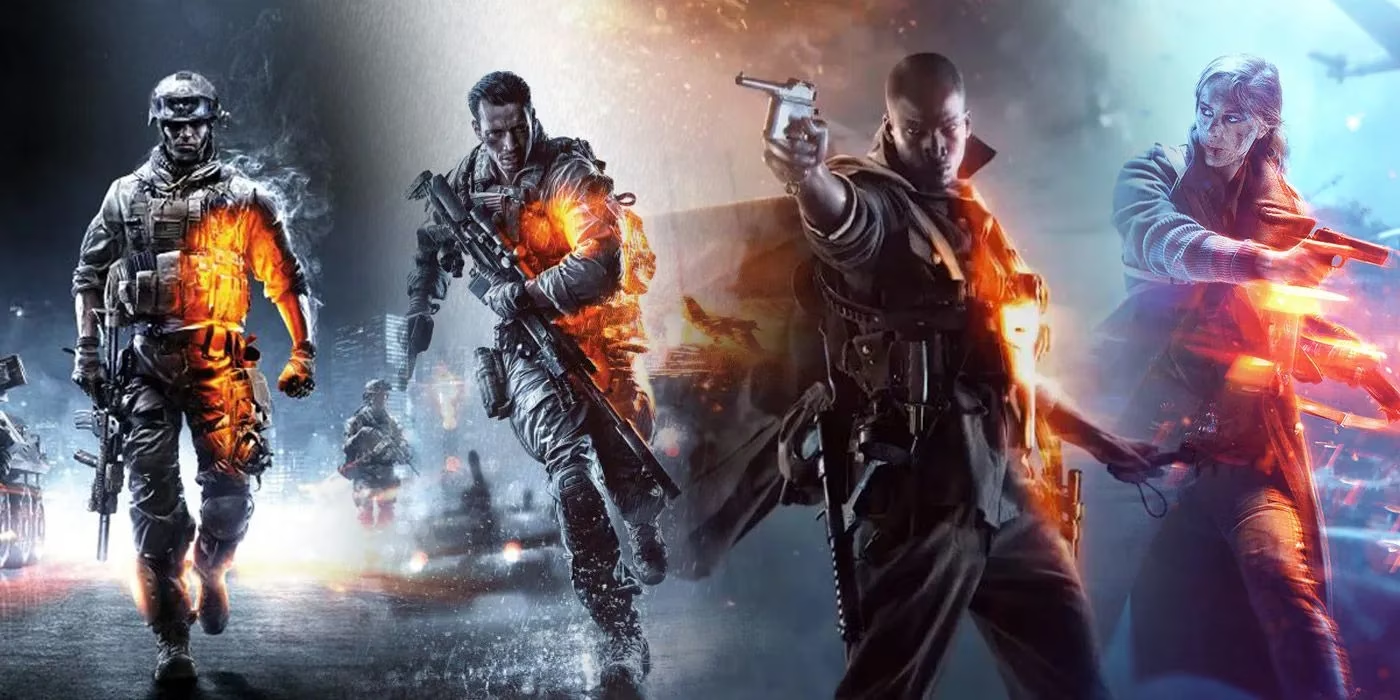
Modern Settings Give DICE Room to Breathe
Here’s the thing: historical settings can be beautiful and respectful, but they also put creative handcuffs on map design. Battlefield 1 and Battlefield 5 had to ground their locations in World War-era authenticity. That leaves less room to invent wild, vertical, or unusual maps. A modern setting? DICE can drop players into a neon-soaked harbor, a collapsing skyscraper, a desert research facility, or anywhere else. Who wouldn't want more variety after years of muddy trenches and European villages? Modern-day maps don’t need to match a history book, so the team can build around fun first.
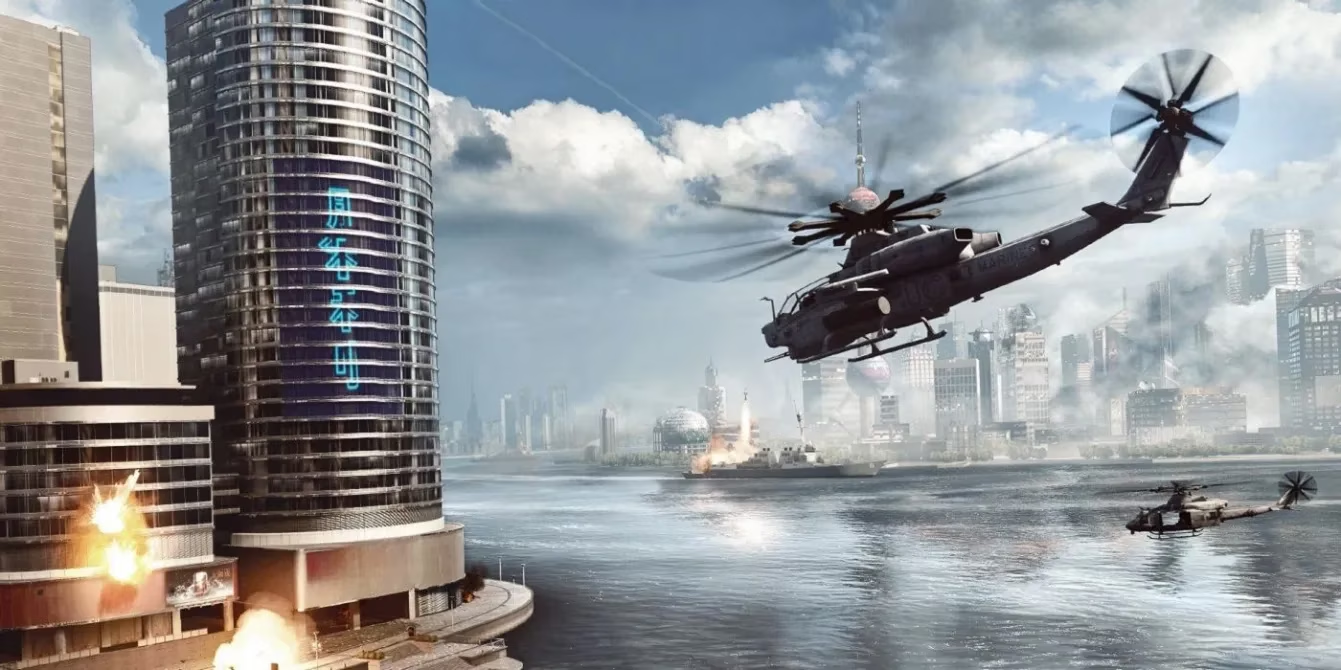
That creative freedom also applies to gadgets, vehicles, and overall pacing. Modern settings allow drones, advanced optics, laser designators, and near-future prototypes without breaking immersion. Battlefield 4’s Siege of Shanghai remains iconic precisely because the setting allowed a skyscraper to fall in the middle of a match. Historical games rarely get those spectacle moments because the technology simply didn’t exist. The modern sandbox is where Battlefield’s “only in Battlefield” chaos thrives.
Weapon Customization Is the Long-Term Hook
If there’s one feature I missed most in the historical Battlefield games, it’s honest weapon customization. Sure, Battlefield 1 and Battlefield 5 had weapon variants, but they often felt like separate guns rather than a single platform I could truly make my own. That’s a huge difference. A real Gunsmith-style system lets me take one assault rifle and retool it for close-quarters hip fire, long-range precision, or aggressive mid-range support.
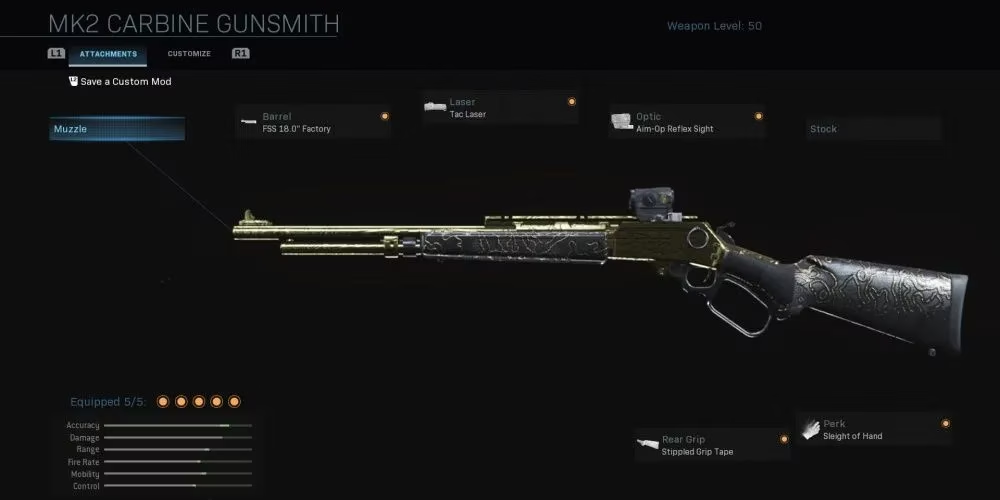
When Battlefield stepped away from modern settings, Call of Duty: Modern Warfare swooped in with its Gunsmith and stole a lot of attention. That still stings. Detailed attachments give players a reason to keep using a weapon after the first twenty kills. Every unlock becomes a little reward, a new way to experiment. Does adding a heavy barrel make the weapon kick too much? Maybe I compensate with a vertical grip. Should I sacrifice mobility for a drum magazine? These decisions turn weapon progression into a gameplay loop, not a checklist.
| Game | Setting | Weapon customization depth |
|---|---|---|
| Battlefield 3/4 | Modern | Deep, attachment-based |
| Battlefield 1 | WWI | Limited, variant-based |
| Battlefield 5 | WWII | Moderate, but still constrained |
| Battlefield 6 ideal | Modern/near-future | Deep, gunsmith-style system |
This also matters in 2026, when live-service games need players to return week after week. If the next Battlefield wants long seasons, Battle Pass progression, and player retention, deep weapon customization is one of the cheapest, most effective design choices. It gives grinders something to chase and casual players more ways to play.
So, What Have We Learned?
Fans weren't wrong. Modern settings and meaningful weapon customization aren't just “nice to have.” They influence map variety, creative freedom, progression, and how long players stick around. The pre-Battlefield 6 debate may have happened before the official reveal, but the lesson is timeless: when Battlefield leans into modern sandbox chaos and lets players build their own weapons, it feels like Battlefield again.
In 2026, I'm hoping the series keeps those lessons front and center. Whether the next game is called Battlefield 6, Battlefield 2043, or something else entirely, my wishlist is simple. Give me a modern battlefield, a deep gunsmith, and a skyscraper that can fall on my head. That’s the Battlefield I remember.