Battlefield 5's Resurgence: A Superior Experience Overshadowed by Hackers
Battlefield 5's resurgence as a celebrated WWII shooter and disenchanted fan sanctuary is fueled by stark contrasts with its successor, yet it remains plagued by a persistent hacking epidemic that shatters its immersive chaos.
In the gritty trenches of a forgotten World War II front, the cacophony of war is palpable. A desperate soldier charges past, clutching a massive explosive stick, while another brandishes a katana amidst the choking smoke. The distant rumble of a tank and the persistent drone of an overhead plane underscore the chaos. Your squad is pinned down, valiantly holding a capture point, its defense bolstered by your well-placed sniper headshots. Then, through the fog of war, arrives a specter: a player from the top of the enemy leaderboard. In an instant, you and your entire squad are dead, victims of an infinite Lewis Gun with bullets that magically track foreheads. This is the paradoxical reality of Battlefield 5 in 2026—a game simultaneously celebrated for its core design and plagued by a persistent hacking epidemic. How did a title once widely criticized become a sanctuary for disenchanted fans, and why does this refuge remain imperfect?
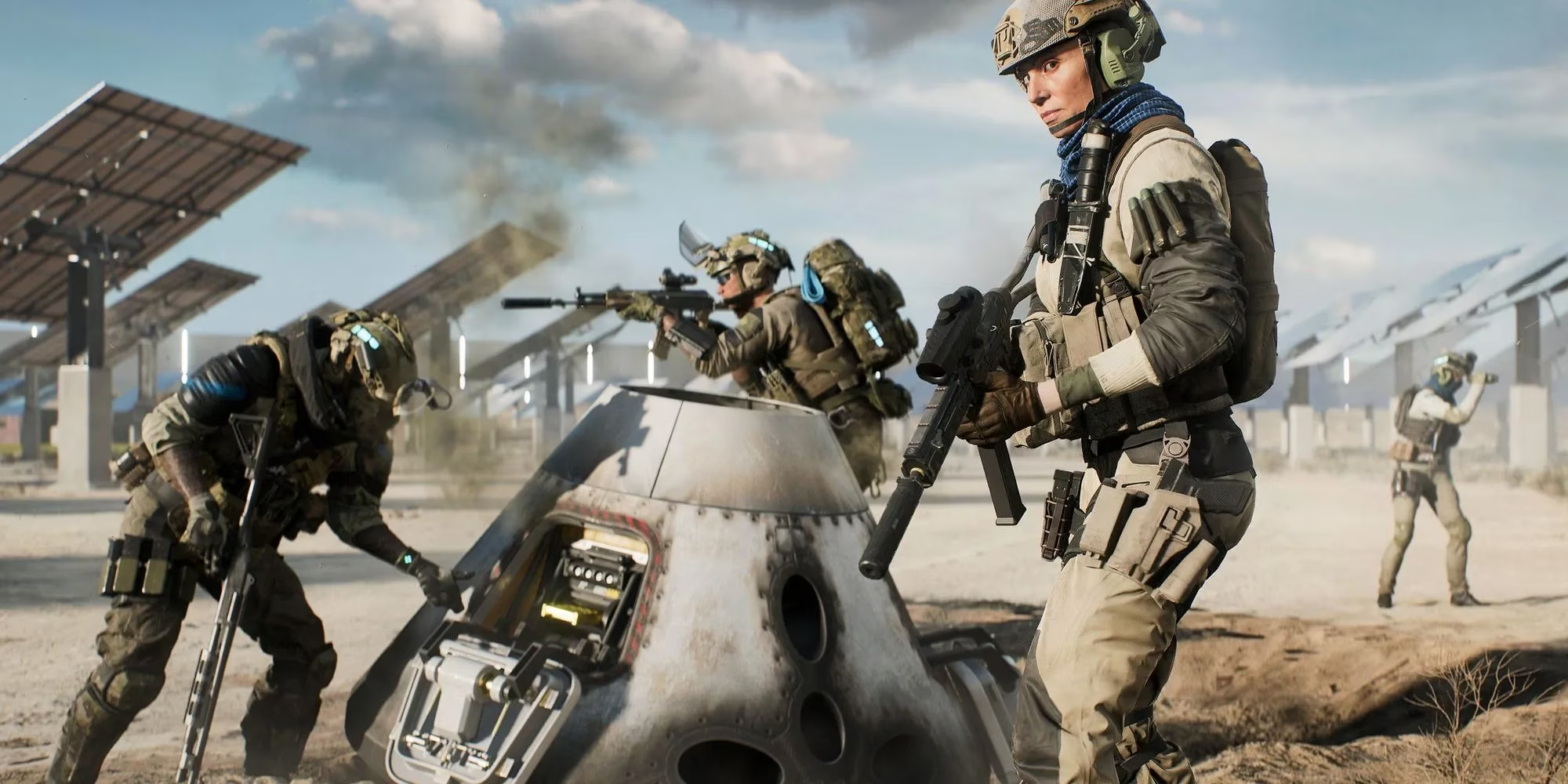
The resurgence of Battlefield 5 is a direct narrative written by the disappointment of its successor. In the wake of Battlefield 2042's release, long-time series fans were presented with what many perceived as a "huge pile of steaming broken promises." The contrast was staggering. Where 2042 offered weird plastic barrenness in map design, lonely gameplay, and poorly thought-out mechanics, Battlefield 5 felt like a revelation. Players flooded back, with peak concurrent player numbers on platforms like Steam regularly rivaling or surpassing the newer title. They returned to a game that, after several solid post-launch updates, offered a cohesive and immersive experience. Was it not ironic that the much-maligned WWII shooter became a bastion of quality? The community's realization seemed to come too late for the game's official support cycle, but just in time to create a vibrant, if troubled, player base in 2026.
The differences between the two games are profound and go beyond mere nostalgia. If one were to list the shortcomings of 2042 compared to 5, it would be a lengthy catalogue:
-
Core Features Missing: Battlefield 2042 launched without a proper scoreboard, advanced movement mechanics (like crouch-running), and functional VOIP (Voice over IP).
-
Teamplay Erosion: The game demonstrated reduced emphasis on teamwork and poor squad integration, breaking the classic Battlefield formula.
-
Visual and Atmospheric Fidelity: Many players argue that Battlefield 5's graphics and atmospheric immersion are superior, despite being an older title.
The divergence is so vast that one could be forgiven for thinking the games were developed by entirely different studios. This stark contrast is the primary fuel for Battlefield 5's ongoing popularity.
However, this homecoming has not been to a pristine paradise. Alongside the returning legions of legitimate players—some still grumbling about the absent Eastern Front DLC—has come a relentless wave of cheaters and hackers. Encountering a hacker in Battlefield 5 is, in 2026, a predictable event. They run rampant with impunity, often wielding impossible weapons with aimbots that negate skill and teamwork. Finding a completely clean game on certain servers can be a challenge, turning what should be a thrilling tactical struggle into a frustrating exercise in futility. Is this the price of returning to a superior game?
The hacking problem is a deep-rooted issue for developer DICE and publisher EA, with a history stretching back years. While it was somewhat forgotten during the game's twilight, the massive player resurgence has brought it back into sharp focus. During peak hours in major regions, the frequency might drop to "only" one hacker every two or three matches, but the problem is ever-present. This persistent issue casts a long shadow over the game's merits. Players are left to grit their teeth and endure, a testament to how much they prefer Battlefield 5's core experience despite its flaws.
A natural question arises: does Battlefield 2042, with its newer anti-cheat systems, fare any better? The reality is complex. 2042's lack of a traditional scoreboard ironically makes blatant hackers harder to identify at a glance. Furthermore, larger player counts per match statistically reduce the chance any single player will be targeted. EA and DICE promoted improved Easy Anti-Cheat for 2042, but this system has shown significant limitations in other titles. By 2026, it's clear that anti-cheat is a continual arms race, not a solved problem. The implication is sobering: if a hacker hasn't disrupted your 2042 match yet, it's likely only a matter of time. So, where does that leave the player?
The situation presents a difficult choice for the Battlefield community. On one hand, Battlefield 5 offers the authentic, team-oriented, atmospheric warfare that defined the series' peak. Its maps, mechanics, and overall feel are widely regarded as superior. On the other hand, it is a game where the social contract of fair play is routinely violated. The final assessment, held by many in 2026, is a resigned one: even with the constant specter of hackers, Battlefield 5 remains the better game. It is a victory tempered by frustration, a beloved classic fighting a war on two fronts—against the enemy team, and against those who refuse to play by the rules. The battle for a perfect Battlefield experience continues, but for now, the trenches of the past, for all their faults, feel more like home than the sterile future.