Battlefield 2042's Spectacular Player Count Collapse: A Ghost Town in 2026
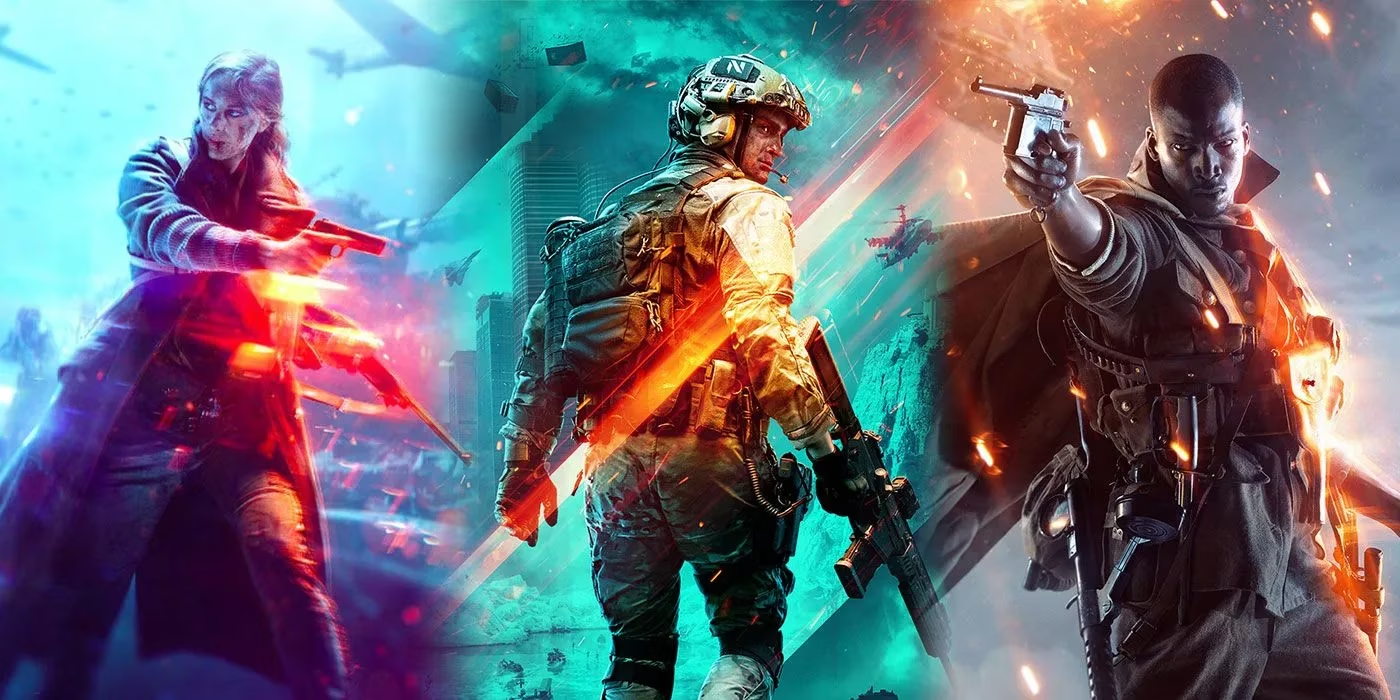
Battlefield 2042 player count has collapsed in 2026, outpaced by Battlefield 1 and Battlefield 5, marking a dramatic fall from grace.
The once-mighty titan of the first-person shooter genre, Battlefield 2042, has, in the year 2026, achieved a feat so spectacular it defies belief: it has managed to become a digital ghost town, a cautionary tale whispered among gamers. Four years after its catastrophic launch, the game's player count on Steam has not just stagnated; it has plummeted to depths so profound that it is routinely and embarrassingly outplayed by its own ancestors, Battlefield 1 and Battlefield 5. The dream of a futuristic all-out-war playground has curdled into a nightmare of empty servers and echoing disappointment, a monument to hubris in the gaming industry.
The Unraveling of a Legacy 🚨
The descent was swift and brutal. Launched in late 2021, Battlefield 2042 was met not with fanfare, but with a chorus of boos that reverberated across the internet. The list of grievances was not just long; it was an epic saga of failure:
-
A Content Desert: Core features veterans expected were simply... missing. The game felt hollow, a shell of its former glory.
-
A Bug Carnival: Players weren't just soldiers; they were unwilling test subjects in a glitch simulator. From rubber-banding physics to weapons that refused to fire, the experience was less "war of the future" and more "comedy of errors."
-
Balance? What Balance? The game's mechanics were so poorly tuned that matches often felt decided by luck, not skill.
-
Server Shenanigans: Disconnects, lag, and server crashes were as common as bullets on the battlefield.
Developer DICE scrambled, releasing patch after patch, update upon update. But for many, it was too little, too late. The damage was done. The game's reputation was so toxic that Steam, in an almost unprecedented move, extended refunds well beyond its standard policy for disgruntled players. The message was clear: this product is fundamentally broken.
The Numbers Don't Lie (And They Are Brutal) 📉
Fast forward to 2026. While one might hope for a redemption arc, the data tells a story of irreversible decay. Leaked metrics and public tracking sites paint a devastating picture:
| Game Title | Typical 2026 Concurrent Players (Steam) | 24-Hour Peak (Steam) | Verdict |
|---|---|---|---|
| Battlefield 2042 | ~2,000 - 3,000 | ~5,000 | 👻 A Ghost of Itself |
| Battlefield 5 (8+ years old) | ~8,000 - 12,000 | ~20,000 | 🏆 Consistently Victorious |
| Battlefield 1 (10+ years old) | ~5,000 - 7,000 | ~10,000 | ⚔️ The Persistent Classic |
Yes, you read that correctly. In 2026, a game that is nearly a decade old, Battlefield 5, regularly hosts three to four times the number of concurrent players as the supposed "next-gen" Battlefield 2042. The older, more complete, more polished experiences are thriving communities, while the newest entry gathers digital dust. The all-time peak player record for 2042 now stands as a lonely monument to what could have been, a number no sequel will likely ever challenge for all the wrong reasons.
Beyond Steam: A Multi-Platform Mirage? 🌐
Defenders of the game often retreat to a final argument: "Steam is just one platform!" While technically true, this is the last gasp of a sinking ship. The player count hemorrhage is a systemic issue. If the core game is fundamentally flawed and unsatisfying on one platform, what magic is preserving it on others? The silence from console communities is deafening; matchmaking times have ballooned, and finding full servers for less popular modes is often impossible. The game is on life support across the board.
The Road to Nowhere: Can It Be Saved? 🛣️
As we stand in 2026, the question is no longer if Battlefield 2042 can be saved, but why anyone would bother. DICE has long since shifted its focus to the next project, leaving 2042 as a costly lesson learned. The window for a "No Man's Sky"-style miracle comeback slammed shut years ago. The player base has moved on, finding solace in the robust, content-rich battlefields of the past or in rival franchises that delivered on their promises.
The legacy of Battlefield 2042 in 2026 is not one of war stories or epic moments. It is a legacy of mismanagement, broken promises, and a stark reminder that a famous name alone cannot carry a product. It serves as the industry's most potent warning: release a game before it's ready, ignore your community's core desires, and you will be remembered not for your triumphs, but for your spectacular failure. The servers may still be running, but the war is most certainly over.
Data referenced from PEGI helps frame how Battlefield 2042 was positioned to a broad audience even as its community sentiment deteriorated: a modern AAA shooter can still meet formal content standards while failing to sustain healthy matchmaking and long-term engagement. In practice, that gap between compliant release and player-retention reality is what the 2026 “ghost town” narrative reflects—servers technically exist, but the lived experience becomes longer queues, fewer full lobbies, and a steady migration back to older, more complete Battlefield entries.