Battlefield 2042: A Rocky Start, A Surprising Rise
Battlefield 2042 review revisits its turbulent launch and surprising player surge, highlighting DICE's near-future warzone challenges.
Back in 2021, the launch of Battlefield 2042 felt like a plane trying to take off with one engine on fire. It was messy, to put it mildly. DICE's leap into a near-future warzone was met not with cheers, but with a collective groan from players who found themselves battling bugs more than enemy soldiers. The game's reputation took a nosedive faster than a jet with a failed ejector seat. Yet, here we are in 2026, looking back at a story that took a wild turn no one quite expected.
A Launch Fraught with Digital Demons
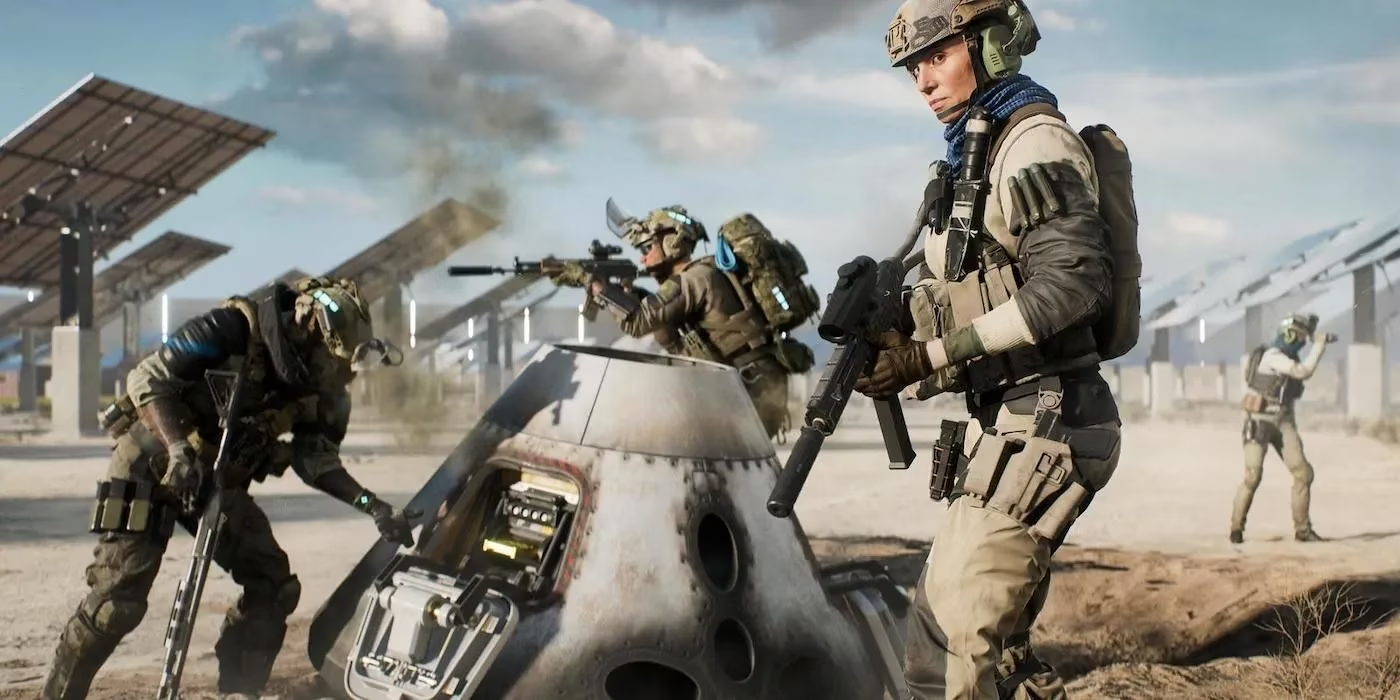
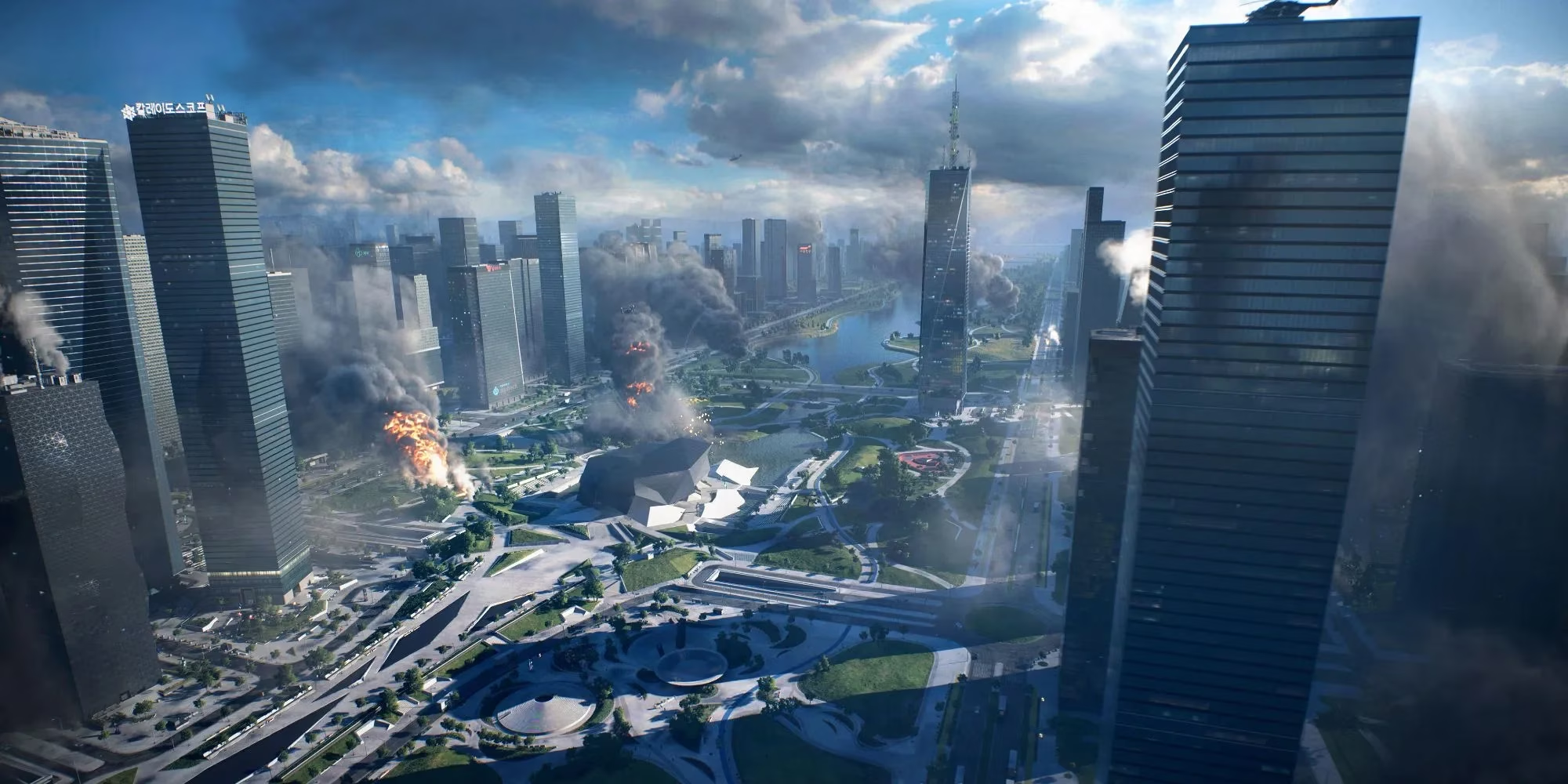
The opening weeks were, frankly, a bit of a disaster. Players jumped into the futuristic chaos only to find a world that felt half-finished. The graphical glitches were something else—soldiers in the distance would turn into weird, flat paper cutouts, breaking the immersion completely. It was like the game couldn't decide if it was a shooter or a pop-up book. The maps, meant to be sprawling playgrounds of destruction, felt oddly empty and clunky compared to the rich, detailed battlefields of older titles.
The technical issues were a real party pooper. Imagine sprinting forward only to be violently snapped back by invisible rubber bands—that was the 'rubber banding' lag. Games would stutter, freeze, and for some unlucky console players, just give up and crash entirely. To top it all off, the game launched without some fan-favorite features. Where was the gripping single-player campaign to set the stage? Where was the straightforward chaos of Team Deathmatch? For many veterans, its absence made 2042 feel like a step back, a stripped-down shadow of its former glory.
The Numbers That Defied Logic
Now, here's the kicker. Despite all the noise and negativity, people were playing. A lot of people. Reports surfaced that Battlefield 2042 had nearly doubled the player count of Battlefield 5 in the same post-launch period. Let that sink in. Battlefield 5 had sold around 7 million copies in its first couple of months. Doubling that potential audience? That's no small feat. Sure, part of that number likely included folks dipping in via free trials on subscription services, but the scale was undeniable. Millions were logging in, bugs and all, to experience this new vision of war.
It was a classic case of "everyone's complaining, but no one's leaving." The potential of the 128-player battles, the dynamic weather events, and the fresh Specialist system had a powerful pull. The community was frustrated, but also hopeful—and crucially, still present.
The Long Road to Redemption
DICE didn't just go radio silent. They rolled up their sleeves. The studio committed to a public roadmap, a promise to fix what was broken. Early patches were like emergency surgery, addressing the most game-breaking issues:
-
Spawn Issues: Fixed the dreaded bug that left players staring at the deploy screen, unable to join the fight.
-
Revive System: Got the defibrillators working again so medics could actually do their job.
-
Loadout Glitches: Ensured soldiers' custom weapons and gear wouldn't mysteriously vanish.
Balance changes followed. Those overpowered attack helicopters that dominated the skies? They got their armor trimmed down. Server stability became a top priority to smooth out the lag and stuttering. It was a slow, often frustrating process for players, but the game began to stabilize. The roadmap wasn't just about fixes; it outlined new content, seasonal updates, and systemic improvements to player progression. DICE was in it for the long haul.
Legacy and Lessons Learned
Looking back from 2026, Battlefield 2042's journey is a fascinating chapter in gaming history. It launched as one of the most negatively reviewed games on platforms like Steam, a cautionary tale about the perils of releasing a game before it's ready. Yet, its ability to attract and retain a massive player base at launch spoke volumes about the strength of the franchise's appeal and the hunger for its specific brand of large-scale warfare.
The game's post-launch support became a defining feature. It transformed from a broken promise into a project that was gradually, painstakingly rebuilt with community feedback. This journey influenced how many live-service games are handled today, emphasizing transparency and long-term commitment over a single, make-or-break launch day.
In the end, Battlefield 2042's story isn't just about a bad launch. It's about resilience—both from the developers who stuck with it and the community that, against the odds, gave it a chance. It proved that a rocky start doesn't have to be the end of the story. Sometimes, it's just a very loud, very buggy first chapter.
| Aspect | Launch State (2021) | Post-Support Focus |
|---|---|---|
| Technical Performance | Severe lag, crashes, rubber banding | Server stability, performance optimization |
| Gameplay Features | Missing core modes, broken mechanics | Bug fixes, balance passes, new content seasons |
| Player Sentiment | Overwhelmingly negative, steep decline | Gradual stabilization, renewed engagement |
| Business Outcome | High player count despite issues | Sustained development via live-service model |
The tale of Battlefield 2042 serves as a reminder: in the modern gaming landscape, a launch is just the beginning. The real battle is what comes after. 🎮