Battlefield 1's Unstoppable Resurgence: A Decade-Old Titan Crushes Modern Competition
Battlefield 1's stunning comeback eclipses Battlefield 2042, captivating gamers with record-breaking player counts and timeless WWI action.
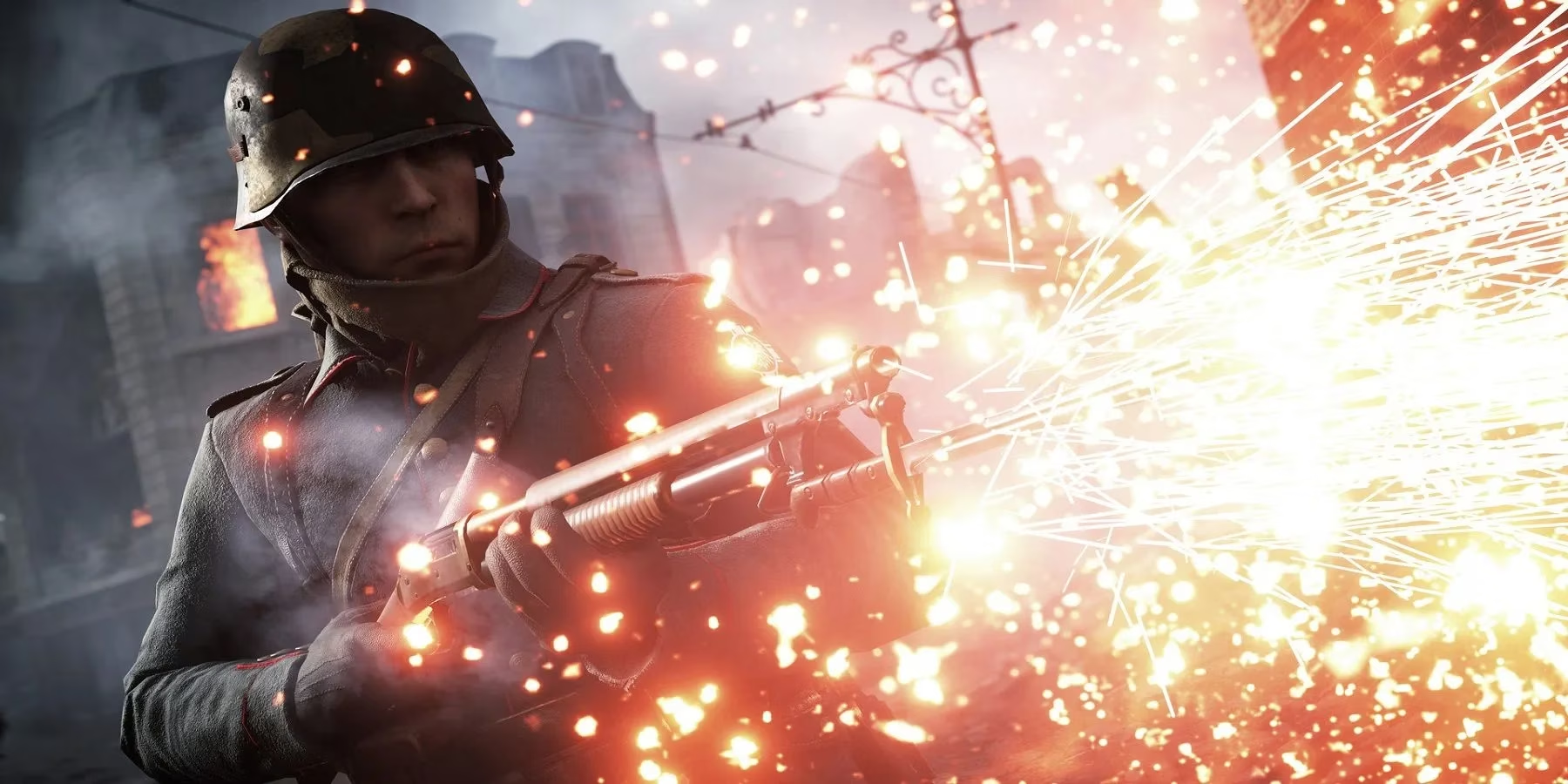
In a stunning reversal of digital fortunes that has left the gaming industry utterly speechless, the venerable warhorse Battlefield 1 has not only refused to fade into history but has instead mounted a colossal, thunderous comeback that is shaking the very foundations of its own franchise. As the calendar flips to 2026, this World War I epic, originally unleashed upon the world a full decade ago, is performing a feat most thought impossible: it is systematically and spectacularly humiliating its own younger, shinier successor, Battlefield 2042, in a head-to-head player count battle that reads more like a historical anomaly than a simple market trend. The trenches of 1918 are, against all odds, more populated than the futuristic warzones of 2042.
A Statistical Juggernaut of Unprecedented Proportions
The raw numbers tell a tale of almost mythical proportions. Forget gradual growth or modest resurgences; Battlefield 1 on the Steam platform has been staging a full-scale, player-led invasion. It recently shattered its own all-time concurrent player record, a record set just a few years prior, by catapulting past the monumental milestone of 51,950 soldiers fighting simultaneously in its muddy, explosive arenas. To grasp the sheer scale of this victory, one must gaze upon the barren landscape of its supposed superior. Battlefield 2042, the franchise's latest and most technologically advanced offering, could only muster a paltry, almost ghost-town-like 5,435 concurrent players during the same period. This isn't just a gap; it's a yawning, 50,000-player chasm that represents a deafening vote of confidence from the gaming community. The people have spoken, and they are screaming for bolt-action rifles and biplanes over robotic dogs and hovercrafts.
The franchise itself, now stretching over a quarter-century since Battlefield 1942 pioneered large-scale digital warfare, has seen its share of triumphs and stumbles. Yet, this specific phenomenon—a ten-year-old title not just surviving but dominating its direct sequel—stands as a statistical freak of nature, an outlier so extreme it demands forensic examination.
Dissecting the Anatomy of a Comeback King
What mystical forces are fueling this engine of nostalgia? The reasons are a potent cocktail of disappointment, value, and timeless design.
-
The Spectacular Implosion of 2042: Let's not mince words. Battlefield 2042's launch was a catastrophe of legendary status. Plagued by performance issues, baffling design choices, and a stark absence of classic features, it arrived not with a bang, but with a whimper heard 'round the gaming world. Developer DICE's subsequent public mea culpas and promises of lessons learned did little to staunch the bleeding. In the vacuum of quality left by its successor, Battlefield 1 stood as a polished, complete, and intensely atmospheric monument to what the series could be.
-
The Irresistible Siren Song of Value: As of 2026, acquiring a ticket to this timeless experience requires little more than loose change found in the couch cushions. Frequently available for a deeply discounted price under $5, Battlefield 1 represents one of the highest quality-to-cost ratios in all of gaming. Why gamble $70 on an unstable future when you can invest a coffee's worth of money into a certified classic?
-
The Timeless Allure of The Great War Setting: In a market oversaturated with near-future gadgets and the well-trodden fields of World War II, Battlefield 1's focus on the brutal, chaotic, and often forgotten battlefields of World War I remains a breath of fresh, if smoky, air. The visceral impact of bayonet charges, the earth-shaking terror of a behemoth airship crashing to the ground, and the frantic chaos of trench warfare offer a unique flavor that modern settings simply cannot replicate. This explains why even Battlefield V, a competent WWII shooter, cannot match the enduring appeal of its older sibling.

The Future: A Universe in Flux, A Legacy Cemented
The implications of this player revolt are seismic. EA, the publishing titan behind the franchise, was forced into a major corporate reckoning. Following the 2042 debacle, they announced a sweeping restructuring of the entire Battlefield development apparatus, with vague but ambitious promises about a connected "Battlefield universe" for future titles. Yet, as the corporate gears slowly turn, the players are not waiting. They have taken matters into their own hands, flooding back to a game that simply works and, more importantly, feels like Battlefield.
Even the opinions of gaming's most influential voices, like top streamer Shroud who once championed 2042, have been rendered utterly moot by the undeniable, brute-force truth of the player count statistics. The community's preference is etched in digital stone, written in the lines of active server logs.

In the end, Battlefield 1's story is one for the history books. It is a testament to the power of compelling art direction, solid gameplay fundamentals, and a respectful treatment of a historical setting. It proves that in the relentless march of graphical progress and live-service trends, there is still a throne reserved for raw, uncompromising atmosphere and expertly crafted chaos. A decade after its release, the guns of the Great War are still roaring louder than ever, and a legion of devoted soldiers continues to answer the call, leaving the high-tech future of their own franchise lying forgotten in the dust. The king is dead. Long live the old king.